Charging start and house batteries concurrently
 

Charging start and house batteries concurrently

Started by Fred Mc, March 30, 2018, 09:31:28 PM

Previous topic - Next topic

Fred Mc

I have 3x12 volt start battteries and 2x 12volt  house batteries(deep discharge). All systems are 12v. The house batteries have a manual disconnect  and so do the start batteries so when parked I can disconnect the start batteries and run off the house batteries.

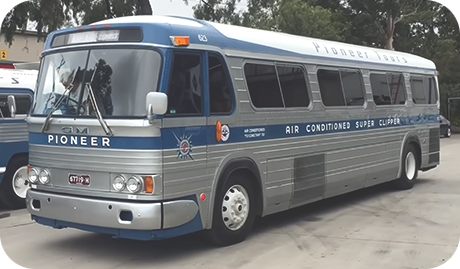
Will I run into any problems charging all of them together when running down the road in my GMPD4106. I would also like to charge the house batteries via solar when parked.

Thx

Fred

bevans6

My systems are both 24 volt, but I charge them both all the time. 
1980 MCI MC-5C, 8V-71T from a M-110 self propelled howitzer
Allison MT-647
Tatamagouche, Nova Scotia

Oonrahnjay

Quote from: Fred Mc on March 30, 2018, 09:31:28 PMI have 3x12 volt start battteries and 2x 12volt  house batteries(deep discharge). All systems are 12v. The house batteries have a manual disconnect  and so do the start batteries so when parked I can disconnect the start batteries and run off the house batteries.

Will I run into any problems charging all of them together when running down the road in my GMPD4106. I would also like to charge the house batteries via solar when parked.

Thx  Fred 

     For electrical systems, it's all in the details.  I assume that the two manual disconnects that you have fully isolate the two battery systems from each other.  If you assess the charge profiles between your two battery banks (check the manufacturer's specs for the deep discharge batteries versus the charge batteries; you don't state, but are both flooded lead acid???) and they're the same, all you need to do is to have a link between the engine alternator and both sets of batteries.  I also would have good ammeters and voltmeters for each of the two systems (I'm pretty sure that a failure in a cell in one battery bank could feed back into the voltage regulation for the alternator and thus interfere with correct charging of both banks, but if both sets of batteries are charging successfully at the same rate, then all should be well.)

     If you have a full disconnect for the start batteries, you can arrange any solar charging system for your house batteries you like -- the same applies to charging from shore power or a generator.  If fact, a system where you keep your house batteries charged by a boondocking system and plug a quality "smart charger" into a 120V outlet in your house system, you can keep your house batteries at a perfect state of charge without the engine being run indefinitely.  And of course, if the charging profiles for the two battery sets are the same and if you're getting suitable charging for both battery banks, you can just tie the two battery banks together and charge both directly from the outside source (solar, shore, gennie).  (And nothing says that you can't usually charge together but also carry a separate charger that you could attach to the house batteries in case a failure of a system component or a mistake in configuration flattens both batteries -- in that case, you could charge your start batteries enough to start the engine and then provide power to both banks as well as charge them both as you drive.  But that's a different, back-up situation.)

   But short answer, if the details are right, you can charge both systems together running down the road.
Bruce H; Wallace (near Wilmington) NC
1976 Daimler (British) Double-Decker Bus; 34' long

(New Email -- brucebearnc@ (theGoogle gmail place) .com)

Fred Mc

Both systems are flooded wet cells and both system can be isolated. The only difference is one set are start (3 batteries) and the other deep discharge (2 batteries) I also have a voltmeter on the dash so presume if they were being overcharged that would show up on the voltmeter.

Thanks

Fred.

Iceni John

Vehicle alternators don't do a good job of charging deep-cycle batteries.   Yes, they'll charge them, sort of, but not fully or correctly.   If you rely on an alternator to charge them most of the time you'll probably end up deficit-charging them and hastening their early demise because of plate sulfation.   Deep-cycle batteries require a proper 3-stage (Bulk, Absorb, Float) charging regimen that only a good battery charger or solar charge controller will do.

FYI, I ran into a similar-ish issue with my two Group 31 start batteries.   Because I drive the bus very infrequently while I'm converting it now, and because my DDEC draws a steady 8 mA off one of the batteries, that battery is always more discharged than the other.   I bought a Schumacher 120VAC charger to charge them, but that's not a convenient or automatic way of keeping them charged.   With a roof-full of solar panels, I thought why not use their excess power to feed two small charge controllers just for the start batteries?   I bought two Steca Solsum 6.6 controllers for that purpose, running each one off each half of my house solar system, but (and there's always a but) they won't work off a big solar array  -  they each need a panel no greater than 6 amps, so they got overwhelmed when connected to 1000 watt arrays.   Also it probably wouldn't have worked right anyway because you can't mix PWM and MPPT controllers on the same panels.   I would have bought two separate 12 volt 6 amp solar panels to run the Stecas directly, but none of them will fit the remaining roof space except for crappy flexible panels that don't last more than a few years.   Back to square one.   I've just now bought two Trik-L-Start battery maintainers for the start batteries:  these are powered off the house batteries and are designed to keep start batteries fully charged during long periods of inactivity.   Their reviews are positive, so let's see how they'll do.

I do have a switch to connect my house and start systems together, but that's only to boost the start batteries when starting in cold weather.   Ordinarily I would never have both systems connected together when driving, if only because I don't want to overload the 160 amp alternator by having it trying to also charge hundreds of amp/hours of deep-cycle batteries.   Besides, my solar system always works when the sun's shining, so it charges my house batteries even when driving down the road.

John   
1990 Crown 2R-40N-552 (the Super II):  6V92TAC / DDEC II / Jake,  HT740.     Hecho en Chino.
2kW of tiltable solar.
Behind the Orange Curtain, SoCal.

richard5933

When we had our 4106 we used a manual switch to bridge the house and chassis batteries to allow us to charge the house batteries from the bus alternator. We only did this when we'd spent a few nights boon docking and didn't have time or occasion to run the generator since, like John, I was not sure how kind the bus alternator would be to the deep-cycle batteries. When our generator stopped working on a weekend trip, it's good that we had the ability to do this, but I wouldn't think that it's ideal to do this all the time. Generally speaking, we relied on our 120v to 12v multi-stage charger to keep the house batteries topped off.
Richard
1974 GMC P8M4108a-125 Custom Coach "Land Cruiser" (Sold)
1964 GM PD4106-2412 (Former Bus)
1994 Airstream Excella 25-ft w/ 1999 Suburban 2500
Located in beautiful Wisconsin

TomC

I have two 150amp continuous rated relays (look like Ford starting relays) strapped together to handle the possible 300amp output of the alternator. I have a on-off-on switch at the dash so I can activate the relay with either the deep cycle or through the ignition circuit. Then I can charge going down the road, or jump start myself if my starting batteries are down, or need more power on a cold starting day. Simple, works.
Tom & Donna Christman. 1985 Kenworth 40ft Super C with garage. '77 AMGeneral 10240B; 8V-71TATAIC V730.

Iceni John

Balmar makes something to safely charge house batteries from an alternator:  http://www.balmar.net/balmar-technology/multi-stage-regulation/   Probably not cheap (boat stuff never is), but Balmar has some items that could be useful to bus converters.

John
1990 Crown 2R-40N-552 (the Super II):  6V92TAC / DDEC II / Jake,  HT740.     Hecho en Chino.
2kW of tiltable solar.
Behind the Orange Curtain, SoCal.

buswarrior

Balmar external regulator for the big coach alternator would be an excellent charging solution for the style of camper who wants to do a good charge into thehouse while underway.

They have both 12 and 24 volt regulators.

However, there is nothing wrong with simply tying the house and coach systems together and charging with the stock charging system. Yes, the house won't get a great charge, but so long as the busnut knows that... and tops the house off properly on a regular basis using other methods...

A good "state of charge" meter on the house is key to knowing what is going on, so you can make informed decisions... again, a Balmar product, "Smartgauge" is the cat's whiskers in this field.

Happy coaching!
Buswarrior


Frozen North, Greater Toronto Area
new project: 1995 MCI 102D3, Cat 3176b, Eaton Autoshift

Fred Mc

Actually I do have a Balmsr smartgauge and am looking forward to using it.

ol713


  HI;
    I use a battery isolator. simple device.  I connect alternator to the center post,
    then hook up start battery to one other post and house battery to the other. Has no
    moving parts and has been reliable for many years. Check out ebay. Just need
    one rated at 300 AMPS.
                                                       Merle
                                               

eagle19952

my house is my starts.
currently 2 8d AGM. I have had as many as 6, if i wish to, i can stop at a DEKA distributor and get 4 more.
way back in time 3 weeks in Death Valley or the National Seashore off Corpus was easy peasy. on 2-4 hours of generator, every other day.
but we'd do Death Valley in October. :)
Donald PH
1978 Model 05 Eagle w/Torsilastic Suspension,8V71 N, DD, Allison on 24.5's 12kw Kubota.

Brett G

I currently have a manual switch between the house and start batteries but I'm about to install this automatic charge relay.  Little expensive but should be the perfect solution? :) https://www.bluesea.com/products/7623/ML-ACR_Automatic_Charging_Relay_with_Manual_Control_-_24V_DC_500A
Brett
1970 MCI MC7 Challenger
8v71 / HT70 Allison
Goodhue MN
Our Bus http://goo.gl/zmk9M9

gumpy

Wow! they're proud of that. I like that their little picture shows 3 of them being used. 

FWIW, I used a relay out of a bus air conditioning system to cross tie my batteries. Didn't cost anything and it's been working for me for about 15 years, but I only got 12 years out of my first set of deep cycle house batteries, so maybe it wasn't the best solution.
Craig Shepard
Located in Minnesquito

http://bus.gumpydog.com - "Some Assembly Required"

gus

I have a converter to charge my house batts when on AC and a relayed isolation switch to connect the starts.

I routinely connect the two after dry camping with no shore power.

I see no problem for the engine alternator since it will not produce 300 amps unless loaded to that amount, probably never happen with two house 29 batts.

I've used the house batts as starting boost a couple of times under unusual situations, it was nice to have them those times!
PD4107-152
PD4104-1274
Ash Flat, AR