Ac stoped blowing cold air?
 

Ac stoped blowing cold air?

Started by harleyman_1000, September 08, 2014, 07:06:44 PM

Previous topic - Next topic

harleyman_1000

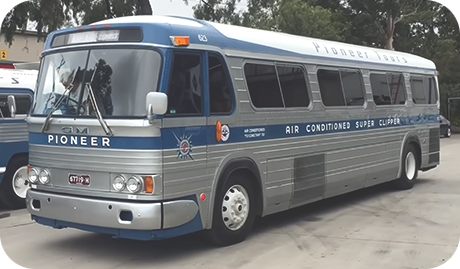
 Ok I had my ac going all day 2 days ago and it was blowing very cold air, and today I turned it on to cool the bus so I could fix some plumbing leaks and start the bathroom remodel, and it won't blow cool air? It blows air just the compressor just doesn't kick on. Any ideas what might cause this?  Would it most likely be the switch that turns the fan and also the ac on or the switch that controls the coolness where the thermostat is connected to? I have a identical unit in the front that works fine, so I can take switches from one to the other to find out whats not working if I need to, but thought there might be another way?
Scott 
St.Louis Missouri

1958 GM 4104 Extended 2 feet, with a 6v92 and 5 speed automatic

http://s783.photobucket.com/user/harleyman_1000/library/Gm4104%20bus?sort=3&page=1

mung

Capacitor?  Usually the first thing to check.
Vern in Central Florida
PD-4104-772

LuckyChow

Had the same problem this past weekend, except mine was the fan motor --- not the compressor.  Now I know why very few people repair them.  Parts are sky high.  A fan motor for my 10 year old Coleman was $200 from Coleman.  I was able to find a third party knock-off motor for $150, which I installed.  Back to working again.  Previous poster is right.  Check capacitor first.
Darryl
Smyrna GA
2000 Gillig Phantom

Nick Badame Refrig/ACC

This has always worked for me..

When in Doubt, Jump it out!

Good Luck
Nick-
Whatever it takes!-GITIT DONE! 
Commercial Refrigeration- Ice machines- Heating & Air/ Atlantic Custom Coach Inc.
Master Mason- Cannon Lodge #104
https://www.facebook.com/atlanticcustomcoach
www.atlanticcustomcoach.com

Scott & Heather

I just did this two weeks ago on our roof a/c. If it's a coleman:

1. Kill the breaker or remove power to roof a/c unit.

2. Go onto roof and remove outer plastic shroud (usually 4 large Philips screws)

3. Once shroud is removed, if you are facing the sloping front end of the a/c, look on the right side of it and you'll see a little sheet metal door that is held onto the ducting by two sheet metal screws. Remove these and slide the door down and out.

4. Inside the little compartment behind that sheet metal door you'll see two or three capacitors (like tin cans). If any of them look swollen or like the top is bursting out, that's likely your bad capacitor. If no visible issues, take your voltmeter and discharge the caps (someone chime in on this). I never did this step and I regret it. You'll need a meter that is rated at higher than 500 volts.

5. Once you've discharged caps, remove the jumper wires from them and take them out one by one. Then put your meter on ohms and put the probes on the metal fins. See if your needle maxes out, then slowly returns to it's initial value. If so, your cap is probably good. If it maxes out and stays there or doesn't do anything or keeps slamming back and forth, you have a bad cap. Buy a new one at RV parts store or online. $20 give or take.


Sent from my iPhone using Tapatalk. Clumsy fingers may contribute to mistakes.
Scott & Heather
1984 MCI 9 6V92-turbo with 9 inch roof raise (SOLD)
1992 MCI 102C3 8v92-turbo with 8 inch roof raise CURRENT HOME
Click link for 900 photos of our 1st bus conversion:
https://goo.gl/photos/GVtNRniG2RBXPuXW9

harleyman_1000

How do I discharge a capacitor?  I read you use a 110 light. Can I simply take a light fixture and touch the black and white wires to each side of the capacitor?
Scott 
St.Louis Missouri

1958 GM 4104 Extended 2 feet, with a 6v92 and 5 speed automatic

http://s783.photobucket.com/user/harleyman_1000/library/Gm4104%20bus?sort=3&page=1

mung

Short a screw driver across the terminals, just make sure it has a rubber handle and you aren't touching metal.

Vern
Vern in Central Florida
PD-4104-772

ros

To discharge a cap. MAKE DOGGONE SURE THAT THERE IS ABSOLUTELY NO POWER TO IT, then take a screwdriver and put across each terminal to the case of the capacitor and then put the diver across all terminal to each other. 

Ros, E.E.

mung

Also don't forget the one hand rule.  When working with any high current wiring, always use one hand as much as possible.
Vern in Central Florida
PD-4104-772

Oonrahnjay

Quote from: mung on September 17, 2014, 05:07:35 AMAlso don't forget the one hand rule.  When working with any high current wiring, always use one hand as much as possible. 

     And don't stand on an aluminum ladder and hang off an aluminum tent pole with one hand while you're touching a metal switch case that has lost it's ground but has picked up a strand of wire from the hot connection.  Don't ask me how I know ...
Bruce H; Wallace (near Wilmington) NC
1976 Daimler (British) Double-Decker Bus; 34' long

(New Email -- brucebearnc@ (theGoogle gmail place) .com)

Ed Hackenbruch

And the best way is to have somebody that knows what they are doing do it......no chance of you getting shocked!
Used to own a 1968 MCI 5A and a 1977 5C.

mung

The very first thing we were taught in my high school electricity class many moons ago, was the one hand rule.  It was explained that if you were to get shocked and one hand is on a grounded item and the other hand takes the jolt, that it will travel right through your heart, so that is the worst conductive path to have, much better to have it go somewhere else in your body.

OK, well it wasn't the first thing, the first thing was don't cross the duck line.  See the teacher was a little eccentric, he had a yellow tape line around his desk and the back area, if you crossed the line without asking him permission first, he would start quacking like a duck and say his attack duck was going to get you for crossing the duck line. 

Kids in the intro class thought he was crazy and didn't get it.  Once you made it into the full year advanced electronics course you realized why he had the line and the rule.  He used to work on some heavy stuff back there including the old color TVs that they used in the class room.  Many times he had things powered on back there that kids should not have been messing with.  So the rule was there to make sure that you didn't go back and mess with anything you shouldn't be messing with and he knew not only when it was safe to let people back there, but also who was responsible enough to be back there when the dangerous stuff was going on.  He is also the teacher that caused everyone to learn how to write backwards, because every paper you turned in had to have your last name at the top in block letters with the last letter touching the right edge of the paper.  It was a lot easier to start at the right edge and work backwards.
Vern in Central Florida
PD-4104-772

eagle19952

the one hand rule...
now you know why hiring an electrician costs so much...in order to have a two handed one....you need two. ;D
Donald PH
1978 Model 05 Eagle w/Torsilastic Suspension,8V71 N, DD, Allison on 24.5's 12kw Kubota.

mung

Not only do you need two, but they have to be smart enough not to touch each other.  Can't figure out why that electrician keeps losing assistants  ???
Vern in Central Florida
PD-4104-772

eagle19952

i helped my kids learn about electric fences (had hogs)....nefer got shocked, they did once.
come here..hold my hand  ;D
Donald PH
1978 Model 05 Eagle w/Torsilastic Suspension,8V71 N, DD, Allison on 24.5's 12kw Kubota.