Question about losing prime.
 

Question about losing prime.

Started by mike802, September 14, 2011, 08:59:05 AM

Previous topic - Next topic

mike802

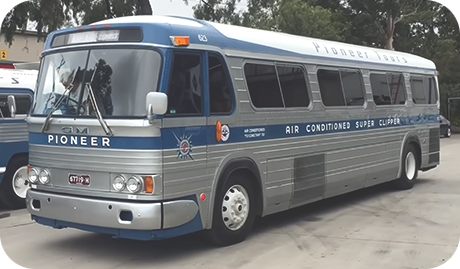
I have been picking away at recoring the radiators in my MC9, finally finished installing them with all new hoses.  I charged up the batteries and fired her up.  She started right off with no smoke, but only ran for about 20 or 30 seconds.  I think it has lost prime, I was going to remove the the fuel pump and re prime, but the fuel lines do not look like they will survive the process.  My question is, can a bus lose prime just from sitting?  It has not been started in a year and yes, I know that is not good, and yes I should have gotten the radiators in much sooner, but life is what it is.  I have to at least change the fuel lines to the pump, but was wondering if prime can be lost just from sitting, or is there a small leak some where?  I am hoping to just change the lines that I have to for re priming, so I can start her up, let her run and get some new anti freeze mixed in before the weather sets in, but I have this feeling its go through the fuel system time.
Mike
1983 MCI MC9
Vermont

belfert

My bus sometimes doesn't get started for upwards of six months and it doesn't lose prime.  (Yes, it is better to not let it sit 6 months, but it is also better to take the bus for a drive if you do start it, and I won't drive it on our salt covered roads unless I absolutely have to.)

If the fuel lines are old they may have a crack that allows air in.
Brian Elfert - 1995 Dina Viaggio 1000 Series 60/B500 - 75% done but usable - Minneapolis, MN

bevans6

You can have a check valve that is gummy, a crack in a fitting or a line, etc.  You can get an air bubble in a line.  It happens with old stuff.  On the fuel line, what I did is go to the hydraulic  store and buy 20 feet of hose in the two sizes needed, buy all the ends, and make up the new lines at home  You need -6 and -8 hose, at least for my bus that's what I needed.  You can sometimes reuse the old ends, but new ends aren't that expensive.

Brian
1980 MCI MC-5C, 8V-71T from a M-110 self propelled howitzer
Allison MT-647
Tatamagouche, Nova Scotia

luvrbus

I don't understand your re-priming technique there Mike ?

good luck
Life is short drink the good wine first

Lin

Re-priming has been discussed quite a bit.  First, you do not need to remove the fuel pump or its lines.  If you remove the filters, and they are not full, priming is an issue.  Fill them.  Make sure that you have not trip your emergency stop flap.  This may be unlikely since it ran normally be for it shut down, but it's worth checking.  When working on the radiator, did you accidentally throw that control switch to rear?  Again, worth looking at before going deeper.

The best prime method for now and the future is to install an electric fuel pump inline that has enough pass through to let the engine run even when turned off.  The easiest method for now and the future is to replace the plug on the secondary filter with a valved fitting that will allow you to attach a simple garden spray can to it.  You then just pump the diesel into the system with the spray can, keep pumping until it is primed and running, turn off the valve and disconnect the pump.
You don't have to believe everything you think.

mike802

QuoteI don't understand your re-priming technique there Mike ?

The way I have done it in the past. Remove pump, use an electric drill to turn pump until fuel comes out, continue pumping to make sure all air is out and reinstall pump.  Thanks Lin for the info.
Mike
1983 MCI MC9
Vermont

luvrbus

That is a lot of work Mike to prime a engine,you could have it up and running before you could get that one bolt out on the pump lol but I have to hand it to for thinking outside the box,I wouldn't remove and install one for 50 bucks lol

good luck  
Life is short drink the good wine first

bobofthenorth

Quote from: luvrbus on September 14, 2011, 11:00:11 AM
That is a lot of work Mike to prime a engine............

That's what I was thinking too.  Might be worthwhile taking some of that time to do an archive search on re-priming and still come out ahead in the long run.  But kudos for thinking outside the box.  My personal preference is pressurizing the fuel tank - directions in the archives.
R.J.(Bob) Evans
Used to be 1981 Prevost 8-92, 10 spd
Currently busless (and not looking)

The last thing I would ever want to do is hurt you.
Its the last thing but its still on the list.

wal1809

A reprime is actually very simple.  Fill the filters with fuel.  Remove the line, that goes to the fuel pump, from the filter head.  Open the fuel return line wherever you can get to it. Fill a bottle like the one in the pic with fuel.  Stick the tip in the hose and squeeze the bottle until you get good fuel flowing from the return fuel line.  Put both fuel lines back on and fire it up.  Done

1984 Silver Eagle Model 10 6V92 Allison auto tranny
www.snakebreaker.com

travelingfools

FWIW, open the door for the fuel tank and see if there is a pump in there. Mine, an ex NJT,  had a priming pump and valve already installed. When my bus ran out, all I had to do was get 12 volts to the pump (actually repalce the pump, but thats another story), close the valve and wait a few min. Others here can tell you more about it..

And like Brian, my bus sits from the beginning of salt season till well into the spring, sometimes 6 or 7 months (wow, thats depressing) and it never loses prime.
John P, Lewiston NY   1987 MC 9 ...ex NJT

gus

As already mentioned, the check valve on the supply side of the primary fuel filter is very often the guilty party when prime is lost. These things seem to like to leak.
PD4107-152
PD4104-1274
Ash Flat, AR

mike802

Thanks everybody for all the great information.  I always wondered if there was a better way, now I know thanks to you all and this forum.  I am almost, almost excited to try out a new way. LOL  but it sounds like I have a leak some where, not inspiring, but much better to have trouble at home than a thousand or more miles away.  The lines are really bad, I have been soaking them with PB Blaster for the past several day and they still wont budge.  A little heat would help, but I DON'T THINK SO LOL, I don't have a death wish.  Looks like I will have to just cut the ends off. 
Mike
1983 MCI MC9
Vermont

Oonrahnjay

Quote from: mike802 on September 15, 2011, 09:05:57 AMThanks everybody for all the great information.  I always wondered if there was a better way, now I know thanks to you all and this forum.  I am almost, almost excited to try out a new way. LOL  but it sounds like I have a leak some where, not inspiring, but much better to have trouble at home than a thousand or more miles away.  The lines are really bad, I have been soaking them with PB Blaster for the past several day and they still wont budge.  A little heat would help, but I DON'T THINK SO LOL, I don't have a death wish.  Looks like I will have to just cut the ends off. 

Mike, I'm not sure if your bus is anything like mine, but many buses have the fuel pump on or near the engine.  People say "my fuel lines must be good - i don't see a leak anywhere".  But the thing is that the fuel lines and the diesel fuel in them coming up from the tank are being pulled to the engine by suction.  If a bus has a tiny leak, it's very common for air to be pulled into that leak by the suction but the fuel inside the fuel line won't leak out when the bus is sitting with the engine off (or, if it does, it's so tiny that it goes unnoticed).  This is really different from the kind of fuel system where fuel is pumped out by a pump in the tank and it's under pressure -- if there's a leak in any of those systems, you will see it!

If this air leak is between the check valve and the tank, you have the check valve holding the fuel in the system toward the engine.  But the air allows the fuel in the line to drop back to the tank.  Often in situations like this, the bus will start and run for a while (20-30 seconds) and die.  Then, if you prime it, the same thing might happen again.  Or maybe you prime it and it sucks enough fuel up to the check valve that it runs OK -- at least until the bus sits stopped for a while and the leak allows the fuel to drain back down again. 

If your lines are looking cracked and deteriorated, you're doing the right thing to change them out.  (Also, it's not unheard of for fuel lines to deteriorate on the inside -- the result may be little bits of rubber floating around in the system and clogging the filters or even a little flap works loose and blocks the flow of fuel on the inside.  That's a problem that's hard to fine!  You just have to have good fuel lines.)
Bruce H; Wallace (near Wilmington) NC
1976 Daimler (British) Double-Decker Bus; 34' long

(New Email -- brucebearnc@ (theGoogle gmail place) .com)

Just Dallas

Wayne,

Your making it too hard.... There is a plug or maybe two on the inlet side of the primary filter. There are also one or two on the secondary.
I only fill the secondary, don't remove any air lines, replace the plug.
Hold the fuel lever on the governor about halfway open and light it off.
Let it run for a minute or so, or until it is running smoothly.
This works everytime and has for the last 75 years when the DD two stroke first made it's civilian appearance.
It doesn't matter if you've lost prime by running out of fuel or if you are replacing injectors and fuel jumpers.

Everyone seems to want a fancy new fangled way of doing something that is really basic. This takes 5 or 10 minutes at most, and works everytime.

DoH

Quote from: wal1809 on September 14, 2011, 12:16:53 PM
A reprime is actually very simple.  Fill the filters with fuel.  Remove the line, that goes to the fuel pump, from the filter head.  Open the fuel return line wherever you can get to it. Fill a bottle like the one in the pic with fuel.  Stick the tip in the hose and squeeze the bottle until you get good fuel flowing from the return fuel line.  Put both fuel lines back on and fire it up.  Done


I'm just an old chunk of coal... but I'm gonna be a diamond someday.

gus

None of these prime methods work if the supply check valve is leaking, you just lose prime all over again!

Also, if you have holes or a leaky connection in the supply line anywhere up to the primary filter the same thing happens. The bad part of this problem is that there will be no fuel leakage on the lines, it just sucks in air and drains back to the tank.

This is the reason it is always good to prime from the tank, then fuel will leak out along the line if there is a hole or a leaky connection and you can find it.
PD4107-152
PD4104-1274
Ash Flat, AR