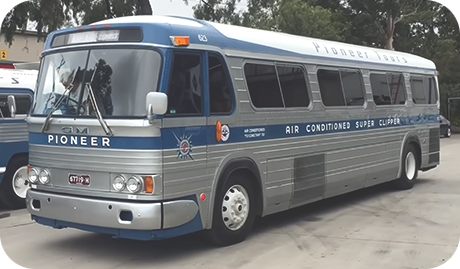
Not Fast Idle afterall
 

Not Fast Idle afterall

Started by coloradorich, February 18, 2011, 02:27:33 PM

Previous topic - Next topic

coloradorich

Decided to check the electrical portion of fast idle. All power to fast idle skinner valve was good. Started bus and air built up to 60lbs. Manually accelerated to 75lbs and fast idle engaged. Air pressure still did not build. Actually dropped back to 60lbs. Had connected compressor the other day at engine compartment but could get no more than 60lbs, compressor kept running. It is the compressor I use to air my tires to 105lbs. It probably does not have the volume to air the bus completely.

While connected to the compressor went all over everything I could reach with soap solution. Found no leaks. Also connected air chuck and compressor to air line under drivers seat by other tank and found no leak.

I am leaning towards changing then governor. I read in the manual that they can be adjusted if so do I increase or decrease the pressure setting? Also does the bus have to be running when this is done? Are there any other checks I should do first?

Does anyone have a decent diagram of the MCI-8 air system. The one in my manual is unreadable.

Thanks a million

coloradorich
" Downhill Flyer Gravity is our Friend "

buswarrior

Never mind the tools or complicated reasons.

Find the leak.

It is going to be a big one that isn't going to make much noise, as it lets it all out before it can even build on the other side of the pressure protection valve.

If you make it to 60 lbs, it is in the auxiliary somewhere.

Suspension, wipers, shutters, belt tensioners, fast idle circuit, the tank itself. Something disconnected?

Your tire pumping compressor is more than capable of airing up a leak free coach.

Use it, on the end of a long hose, placed far away or inside the garage, so you can hear where the air is escaping. Get an assistant who can hear better than you, if necessary.

happy coaching!
buswarrior


Frozen North, Greater Toronto Area
new project: 1995 MCI 102D3, Cat 3176b, Eaton Autoshift

coloradorich

Will try to move compressor farther away. Do not know shutters and what tank do you mean. The only thing strange I have found is a rattle in the air dryer, but I have already serviced the dryer and rebuilt the purge valve.

Thanks
" Downhill Flyer Gravity is our Friend "

coloradorich

Just another thought. What is the pressure protection valve?
" Downhill Flyer Gravity is our Friend "

bevans6

MC9 manuals are here:  http://busrvparts.com/MCI_Manuals.htm

Download the brakes and air section, your air system will be very similar if not identical to the MC9 one. 

The pressure protection valve is a valve in the air line that connects the dry tank, where you read the pressure on the gauge, to the rest of the air system.  It opens at 65 psi or thereabouts and protects the dry tank, which is what provides air to the braking system, from leaks in the rest of the air system.  it's physically located on one of the two tanks on the rear wall of the front axle bay.  There are two tanks in there, one is the wet tank and one is the parking/emergency tank.  There are two little cannister looking things strapped to the emergency tank, one is an air filter and the other is the PPV.

The dry tank is located, I am pretty sure on the MC8, behind the rear wall of the rear luggage bay on the drivers side.  You can get to it's drain valve through a little door at the bottom of the rear wall of the luggage bay.

Places to listen for leaks are between the front wheels in the front axle bay, inside the accessory tank compartment beside the driver, lift up the spare tire compartment door and stick your head in there, listen around the dry tank area inside the rear luggage bay with that little door open, and between the drive wheels where all the brake plumbing is.  Also, inside the drivers side engine bay door, up past the rear electrical panel is a lot of accessory system air plumbing, again up inside the passenger side engine bay door where you see the compressor, there is an accessory air system manifold there, and there are air valves operating various things and cylinders all over the top of the engine.  Also listen around the door operating system, the air door lock, the air wipers and such, all around the front of the dash area and beside the door on the left side of the stairs, in behind that panel.

The reason we think you have an air loss in the accessory system, or past the PPV, is that it doesn't open and let air past until you get up to 65 psi or so, depending on it's exact setting.  Since you can build air to 65 psi, that suggests that the compressor is working, the air dryer isn't leaking, the wet tank is accepting air from the air dryer, and air is being passed onto the dry tank, which is filling up to 65 psi, and then the PPV opens and lets air out into the rest of the system.  That's is when your air loss seems to start.

Hope this helps

Brian


1980 MCI MC-5C, 8V-71T from a M-110 self propelled howitzer
Allison MT-647
Tatamagouche, Nova Scotia

buswarrior

Brian beat me too it, but here's some more words:

Tank under the driver is the aux tank. Rust holes,in particular around the band. Check the drain.

The pressure protection valve "protects" the brake system from the rest of the air accessories.
In the condition your coach is in now, if that happened while going down the road, the brakes will be maintained at the 60 pounds, and not lower, as the spring in the PPV closes unless there is  that much air pressure against it.

Without the PPV working, you'd be getting no air anywhere, it would be heading straight overboard, then you'd have the whole coach to have to look for it.

Shutter system is the vertical slats that are in front of the radiators, and the damper doors under the fan compartment. The pistons are notorious leakers. Follow the airlines back from the pistons to the control/filter apparatus up on the wall above the engine on the right side, looking in from the rear. There are two valves on it, one to shut off the air supply, and one to exhaust the shutter system. For now, close the supply and open the exhaust, to see if it makes any difference. Leave the supply closed for now to reduce the trouble shooting. The exhaust left open and the supply left on can cripple the coach.

happy coaching!
buswarrior


Frozen North, Greater Toronto Area
new project: 1995 MCI 102D3, Cat 3176b, Eaton Autoshift

buswarrior

What is your unit number for your MC8, There are many different ways to plumb an MC8, back and forth through the wild mid 70's regulations and unregulations.

Where did I post that stuff...?

happy coaching!
buswarrior
Frozen North, Greater Toronto Area
new project: 1995 MCI 102D3, Cat 3176b, Eaton Autoshift

bevans6

My other thought is that if you can't hear the air leak, it is probably very large in size, dimensionally.  I can tell you that you can hear a loose connection, or a 1/4 hole just fine, it's bloody loud.  A tiny leak, like a bad seal or diaphragm, that is hard to hear doesn't leak enough to cause your drastic air loss.  So I am thinking a large 1" to 2" hole in a tank or something.  Look all around the accessory tank (by "look" I mean put your hand up and feel for rushing air), and the same around the two tanks between the front wheels.

Brian
1980 MCI MC-5C, 8V-71T from a M-110 self propelled howitzer
Allison MT-647
Tatamagouche, Nova Scotia

coloradorich

Thanks for all of the info. Will download manual sections.

My bus is unit No. T46-435 Serial no. 1500. Manufactured by TMC in Roswell NM. Which means it was built by Aliens.... I already know that not everything is the same a normal MCI 8's.

Will keep you all posted on what I find.

" Downhill Flyer Gravity is our Friend "

coloradorich

Finally heard and found a leak. It was the rear airbag on passenger side. Don't know if this is the only one. Have to change airbag first.

Where is the best place to get one? I know I can get one at U.S.Coach from Luke. Fortunately the RV park where I am has a repair shop and he will help me changing the airbag, jacking up the rear, etc.

Hope this is the only leak. Wish for the Best!!!!
" Downhill Flyer Gravity is our Friend "

bevans6

Good for you!  Odds are that it's the only serious leak at this point.  I personally got my air bags from Luke, along with new fasteners

Brian
1980 MCI MC-5C, 8V-71T from a M-110 self propelled howitzer
Allison MT-647
Tatamagouche, Nova Scotia

Len Silva

I would disconnect and cap the line to that airbag and try again.  If there are no more leaks, that's great.  If there are, you might as well chase them down before starting repairs.

Hand Made Gifts

Ignorance is only bliss to the ignorant.

coloradorich

Good advice. Would that be the line from the leveling valve? If so where is that valve and Can I get to it without going under the bus. I have plenty of room on the passenger side engine compartment were the lavatory used to be.

Thanks
" Downhill Flyer Gravity is our Friend "

buswarrior

Since you are going to do one... what do the others look like?

Yes, the leveling valve has a linkage connecting the axle to the leveling valve, which is attached to the body, you'll see it under there.

Every busnut benefits from a large coffee can full of brass fittings and caps...

about the time you have a whole set of everything you'll ever need, the cycle of replacement starts over, or you sell the coach!!!!

happy coaching!
buswarrior
Frozen North, Greater Toronto Area
new project: 1995 MCI 102D3, Cat 3176b, Eaton Autoshift

coloradorich

Since I don't have all necessary fittings will have to wait until Monday. This town closes everything on weekends. Do not feel like driving 50 miles one way for a fitting;

Be in touch

Thanks
" Downhill Flyer Gravity is our Friend "