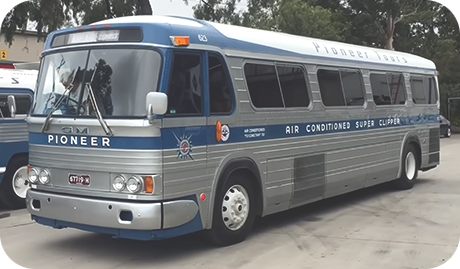
Engine compartment oil pressure gauge (MCI)
 

Engine compartment oil pressure gauge (MCI)

Started by Mike in GA, January 21, 2011, 09:23:55 AM

Previous topic - Next topic

Mike in GA

The mechanical oil pressure gauge in my engine compartment (MC96a3) is oil-filled, and sits on a small manifold on the left rear firewall. The gauge has lost more than half its oil, and over the years has become stained and hard to read. I plan on replacing it. On this manifold with the pressure gauge are two senders, one I would imagine for the dash oil pressure gauge and one to shut down the engine in case of low oil pressure.
    Two questions: must I replace this mechanical gauge with another oil filled unit, or will a standard mechanical gauge work?
    And two, when I unscrewed the old gauge, some engine oil leaked out of the small manifold, and air got in.  Will the resulting air pocket confuse the sender that shuts down the engine?  I see a schraeder-type air valve on this small manifold - is that used to bleed out unwanted air after start-up?
Thanks in advance!
Mike in GA
Past President, Southeast Bus Nuts. Busin' for almost 20 years in a 1985 MC 96a3 with DD 8v92 and a 5 speed Allison c/r.

gumpy

Use a filled gauge. They are better quality and will last longer. Cost a bit more money, but worth the expense. Last thing you need is for a cheapo gauge
to break and start leaking all your oil out. BTDT, only it was with diesel. Ended up dumping about 50 gallons of diesel out the back of my bus because of
a cheapo gauge that ate itself.

That bit of air in there won't matter. The valve is there for testing the pressure with a portable gauge, like a tire gauge.
You can try bleeding it if you want using the valve, but I don't think you'll get much out of it.
Craig Shepard
Located in Minnesquito

http://bus.gumpydog.com - "Some Assembly Required"

bevans6

Any pressure gauge of the appropriate range will work, but as said the higher quality the better.  I've personally never had a gauge fail, but sometimes it seems like everyone I know has had one fail (usually on the dash of their old english sports car with resultant boiling oil spurting all over their gentlemanly bits).

I had a issue on my trip last september where I needed to plug an oil line on the oil pressure manifold.  I couldn't find a 1/8th NPT plug so I bought a cheapy air pressure gauge at the hardware store in whose parking lot I was at the time, took the gauge off the  end, and screwed it into the hole as a plug that happened to also read oil pressure.  It's still in there, but I do plan to change it out...

Brian
1980 MCI MC-5C, 8V-71T from a M-110 self propelled howitzer
Allison MT-647
Tatamagouche, Nova Scotia

Mike in GA

Luke at US Coach is sending me a standard (non-liquid filled) gauge - only about $7.00 - and the parts guy at Central Florida Bus repair here in Lakeland said he can probably track down the oil filled model if I bring in the old one  So it looks like I'm covered.  Thanks for the input!
Mike in GA
Past President, Southeast Bus Nuts. Busin' for almost 20 years in a 1985 MC 96a3 with DD 8v92 and a 5 speed Allison c/r.

bevans6

trivia from the interweb about gauges that I didn't know...

Pressure Gauge Design Types
  Two common reasons for gauge (and switch) failure are pipe vibration and water condensation, which in colder climates can freeze and damage the gauge housing. Figure 1 illustrates the design of both a traditional and a more reliable, "filled" pressure gauge. The delicate links, pivots, and pinions of a traditional gauge are sensitive to both condensation and vibration. The life of the filled gauge is longer, not only because it has fewer moving parts, but because its housing is filled with a viscous oil. This oil filling is beneficial not only because it dampens pointer vibration, but also because it leaves no room for humid ambient air to enter. As a result, water cannot condense and accumulate. Available gauge features include illuminated dials and digital readouts for better visibility, temperature compensation to correct for ambient temperature variation, differential gauges for differential pressures, and duplex gauges for dual pressure indication on the same dial. Pressure gauges are classified according to their precision, from grade 4A (permissible error of 0.1% of span) to grade D (5% error).  http://www.omega.ca/prodinfo/pressuregauges.html

A place that sells them for cheap:  http://www.libertyaz.com/store/index.php/categories/liquid-filled-pressure-gauges/page-2/

If you want some that admit up front they are from ROC or the other China:  http://www.pressuregauge.com.cn/lfgauge.htm

Brian

1980 MCI MC-5C, 8V-71T from a M-110 self propelled howitzer
Allison MT-647
Tatamagouche, Nova Scotia

James77MCI8

77 MCI 8
8V-71 4 spd

JackConrad

Mike,
    Surplus Center in Nebraska http://www.surpluscenter.com/  usually has both standard and filled gauges. The filled gauges are to help prevent gauge damage from vibration.  Jack
Growing Older Is Mandatory, Growing Up Is Optional
Arcadia, Florida, When we are home
http://s682.photobucket.com/albums/vv186/OBS-JC/