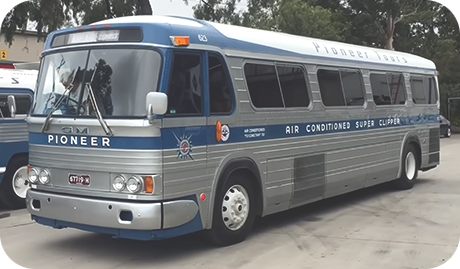
30 amp electrial and State Park GFI
 

30 amp electrial and State Park GFI

Started by Madmike, June 13, 2010, 08:36:42 AM

Previous topic - Next topic

Madmike

This weekend i went to or state Park. Parked her and got out to hook her up. I noticed that the 15 and 30 amp Breakers had GFCI's and I thought OH KNOW! You guys taught me that my bus does not like GFI's and I can't use them. Of course they tripped the breaker on the 30 and 15 amp plugs. I don't have a 50 am so i was dead in the water. It was 93 degrees and it was very humid around 80%. I hated to do it but I had to break the news to my little boys that we would have to go home. Very sad time in bus land. My question is: What can I do to get around this. Can it be fixed? Would i have to upgrade to a 50 amp? All the state parks in IL have switched to this system and if I want to go I have to Change. Please give me any advice you might have.
You can have this bus when you pry her from my cold dead fingers.

Len Silva

Yes, you can probably fix it.  The only problem I know of is some inverter/chargers have a neutral-ground connection and/or a capacitor in the circuit that fools the GFI.

With an ohmmeter, check for continuity between neutral and ground on the 30 amp plug.  There should be no connection between the two.  If there is continuity (and there is if you are tripping GFI's), isolate circuits one at a time by flipping breakers, disconnecting appliances or what ever you have to do until you find it.

You should see no connection between neutral and ground or between hot and ground.

Hand Made Gifts

Ignorance is only bliss to the ignorant.

bevans6

well, you need to figure out why your bus is tripping the GFI breaker.  I would start by checking my grounds, make sure neutral is separate from ground on the bus itself, and disconnect things until I can plug in the bus and NOT trip the breaker.  Then, start connecting things back up.  You can install a temporary (or permanent) GFI outlet where you plug your bus in at home.  If it trips that, and it should to start, you can use it to test with.

Brian
1980 MCI MC-5C, 8V-71T from a M-110 self propelled howitzer
Allison MT-647
Tatamagouche, Nova Scotia

Sean

Mike,

The right answer here is that you need to figure out why you are tripping GFIs, because that might be indicative of a larger problem.

The most usual reason why this happens is a common wiring error: connecting ground and neutral together in the main panel.  In an RV, ground and neutral must be kept separate.

The second most common reason is use of a transfer switch that does not switch neutral.  This causes the neutral to ground bond in the generator to carry back to the rest of the coach wiring.

Either of these problems is a serious safety hazard and should be fixed.  That should cure the GFI tripping problem.

The third most likely problem is that there is an appliance on board that has an internal ground fault, and this, too, should be corrected.

There is a potentially non-hazardous source of these nuisance trips, which is at the inverter, which will have a ground-to-neutral bonding relay, so that the inverter operates safely when it is powering loads.  Some inverters, notably the Xantrex SW series, will trip GFI's due to filter capacitance.  If either of these is your problem, there are some workarounds we can discuss.

Bottom line: find the culprit first, then we can address the way to resolve it.

-Sean
http://OurOdyssey.BlogSpot.com
Full-timing in a 1985 Neoplan Spaceliner since 2004.
Our blog: http://OurOdyssey.BlogSpot.com

Sean

Wow, you guys type a lot faster than I do.

Quote from: Len Silva on June 13, 2010, 08:45:42 AM
... isolate circuits one at a time by flipping breakers, disconnecting appliances or what ever you have to do until you find it.

Just a word of caution: turning off a circuit breaker will generally not isolate a ground fault.  That's because the breaker is in the hot side of the circuit, and does not disconnect the neutral side.  So if there is a ground to  neutral fault in an appliance, neutral current from the neutral bus in the panel will actually flow out to the appliance on the appliance's neutral, then back to the panel ground on the appliance's ground, even if the breaker for that appliance is off.

This is also going to be true for inverters and anything else hardwired as well, so I am afraid that while Len's advice is correct, you're really going to have to physically disconnect each circuit.

I would start by looking in the three most obvious places: the main panel itself, the transfer switch, and the inverter.

-Sean
http://OurOdyssey.BlogSpot.com
Full-timing in a 1985 Neoplan Spaceliner since 2004.
Our blog: http://OurOdyssey.BlogSpot.com

Madmike

when i plugged it in and it tripped the first time, i went back to the bus and turned off the main breaker. Thus taking power away from the whole system. It still tripped after this. I took the plug apart and could not find any thing wrong with it. Came home and plugged it in to the house power on a plug that is not gfi protected ( only breaker ) she works fine.
You can have this bus when you pry her from my cold dead fingers.

belfert

Does code require GFI on 30 amp RV service these days?  I suppose they are being extra cautious, but I expect they are going to get a number of complaints.
Brian Elfert - 1995 Dina Viaggio 1000 Series 60/B500 - 75% done but usable - Minneapolis, MN

buswarrior

Everything outside (and in the bathroom)  around here is supposed to be protected by a GFI.

With what is known about them, I'd wonder if the install of a GFI at the post would be a good due diligence defense on the campground's part for an unintended electrocution?

Exposes all the RV's that have the neutral/ground co-mingled?

Now, from the other side of the fence, does the presence of a properly functioning GFI give the camper some piece of mind about the potential for shoddy campground wiring?

happy coaching!
buswarrior
Frozen North, Greater Toronto Area
new project: 1995 MCI 102D3, Cat 3176b, Eaton Autoshift

Alan Baker

If the pedestal had a 50 amp plug you should have used a 50 to 30 amp adapter.

You should carry adapters of all configurations to over come problems like this.

Alan
Alan Baker
Lake Placid, FL
61 PD4106-00038 for 23 yrs
84 Eagle-10 10" roof raise
6V92 turbo 90 injectors Allison 740
since 2000
Every ride is a new adventure

Sean

Quote from: Madmike on June 13, 2010, 09:19:04 AM
when i plugged it in and it tripped the first time, i went back to the bus and turned off the main breaker. Thus taking power away from the whole system. It still tripped after this. ...

Again, ground faults are not interrupted by circuit breakers.  You need to physically disconnect circuits, including the neutral wires, until you isolate the problem.

Quote from: belfert on June 13, 2010, 09:51:04 AM
Does code require GFI on 30 amp RV service these days?  I suppose they are being extra cautious, but I expect they are going to get a number of complaints.

Not required by the NEC, but required by some state codes which are more stringent.  Also a good idea from a safety perspective anyway.

We've encountered this in a few parks, and it was a great annoyance until we figured out how to keep our SW4024 from tripping them (disconnect the filter capacitor).

Quote from: Alan Baker on June 13, 2010, 10:33:28 AM
If the pedestal had a 50 amp plug you should have used a 50 to 30 amp adapter.

Sorry, but this is dangerous advice.  You need to figure out why you have a problem and fix it -- you could be putting yourself at risk.

Secondly, 50p-30r adapters are dangerous in general.  That's because your cord is only rated for 30 amps, but the pedestal breaker will pass 50 amps.  If you are going to carry and use one of these for those very rare occasions when you will find a 14-50R but no TT-30R, make absolutely certain that you have a working 30-amp main breaker in the circuit aboard the coach.

-Sean
http://OurOdyssey.BlogSpot.com
Full-timing in a 1985 Neoplan Spaceliner since 2004.
Our blog: http://OurOdyssey.BlogSpot.com

CraigC

Sean is 100% correct. Find & fix the problem; the life you save my be one of your son's!!!

I can plug into any 110 GFIC and not trip it. I also have several GFIC's within my coach.

Like Sean said, #1- look first to see if the ground wires and the white neutral wires are on separate bus bars. They can not share the same one like a house. I had to add a separate insulated bus bar at my sub panel circuit breaker box to accomplish this.
Question for Sean;
I have a 30 amp main as my shore line enters the coach. The hot and neutral are switched through the 30 amp. circuit breaker. The ground is not switched.
The ground is always grounded to shore when plugged in, the coach chassis is grounded to this, the 110V generator is grounded to this, all 110V wiring from my sub panel main breaker are grounded to this.
I have a 30 amp transfer switch that switches the blk & wh. only, it's default is shore power and activates with a time delay when the generator is turn on. 
The 5KW generator has it's own 40 amp. circuit breaker box. In the gen. brk. box I have the hot with a circuit breaker, I have the neutral and ground tryed to the same barrier strip. I have a ground strap at the generator to chassis The ground then goes through the auto transfer box ( just passes through ) and to a separate insulated ground barrier strip in the sub box for the circuit breakers, this grd. then goes to the 30 amp main CB box to it's own separate lug. If the generator is running with the shore cord plugged it is also ground to shore.
I do not have a inverter. I have always thought this was 100% correct. Am I wrong anywhere in my thinking? I am not trying to high jack this thread I thought this question is basically what is being discussed.

Thanks for any input.
Craig C
4104 8V71TA/V730

Sean

Craig,

So long as the generator/shore transfer switch also transfers the neutral wire, you should be OK.  Even if both shore and generator are energized, the transfer switch should ensure that the coach's main neutral is connected to only one or the other, but not both.  So the ground-to-neutral bond will still only be in a single location.

-Sean
http://OurOdyssey.Blogspot.com
Full-timing in a 1985 Neoplan Spaceliner since 2004.
Our blog: http://OurOdyssey.BlogSpot.com

Bill B /bus


We've encountered this in a few parks, and it was a great annoyance until we figured out how to keep our SW4024 from tripping them (disconnect the filter capacitor).

Sean, how does affect the inverter?
That is one of the cautions in the Trace manual that it will trip GFI breaker.
I do the workaround with 30/50 adapter and set the Trace incoming at <30 amps.
Even is you incorporate the neutral ground bonding relays per Trace all you end with is a relay race in which the GFI trips before the relays can respond with correct bonding setup.

Bill
Bill & Lynn
MCI102A3, Series 50 w/HT740

gumpy

Madmike,

You have not indicated what your equipment list is on your bus.  What inverter are you using?  Is there a generator?  Transfer switch?  etc...

Sean's advise should be heeded. It's possible it's caused by your inverter, but it's also possible you have another problem elsewhere. We really need more info to
help diagnose your problem. Start with the equipment list.

Did you wire your coach or was it wired by someone else?

craig
Craig Shepard
Located in Minnesquito

http://bus.gumpydog.com - "Some Assembly Required"

oldmansax

This may not apply here but some coaches (bluebirds in particular) have polarity fault indicator lights that will trip a GFI. This is discussed at length on the Wanderlodge board. I think there is a work around but I didn't read the entire thread. I can look it up if anyone is interested.

TOM
1995 Wanderlodge WB40 current
1985 Wanderlodge PT36
1990 Holiday Rambler
1982 Wanderlodge PT40
1972 MCI MC7