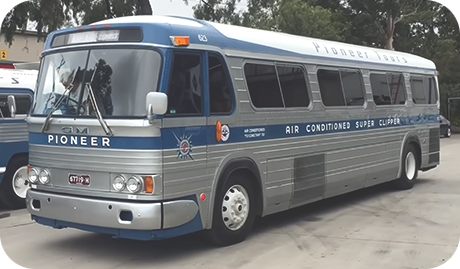
A day in the life of a busnut
 

A day in the life of a busnut

Started by belfert, November 30, 2008, 06:35:00 PM

Previous topic - Next topic

belfert

I wanted to take the bus for a quick spin today, but had all kinds of problems.

Batteries were low so it wouldn't turn over.  I charged the batteries for about 30 minutes and it started.  The stop engine light came on within 60 seconds and the engine shut down.  I tried it again with same result.  Checked the codes and found an code 43.  Code 43 is low coolant.  I added a little coolant and the engine stayed running now.

The air compressor governor was frozen so no air pressure would build.  I decided to leave the engine idling at about 1,200 RPM and it finally warmed things up enough after 15 or 20 minutes to go.  (I have a Series 60 so the idling isn't quite as bad for it.)

All in all it took me a good 90 minutes of monkeying around to make a 30 minute trip.  I just wanted to take the bus out to charge the battery, get it wamred up fully, and to top off the tank for winter.
Brian Elfert - 1995 Dina Viaggio 1000 Series 60/B500 - 75% done but usable - Minneapolis, MN

Blacksheep

You should really get into the habit of a pre-check including ALL fluid levels before ANY trip, long or short!
Also it would be highly adviseable to invest in a marine on-board battery charger that simply plugs into a 110 outlet and keeps your batteries fully maintained while sitting idle for long periods! You won't have nearly as much to post about in a negative way and your bus adventures will be much more pleasurable!
Ace

white-eagle

i just tied my start batteries onto my house batteries so they can stay charged just like the house batteries do, off the inverter.  i got an isolator switch that i can disconnect the two sets when i want, connect them back up when i want.

better than having a separate charger?  i don't know, just thought i'd post it in case Ace (or anyone else) had a good reason why i shouldn't do what i did.  otherwise, looks like i saved buying a separate charger.

Tom
1991 Eagle 15 and proud of it.
8V92T, 740, Fulltime working on the road.

Fran was called to a higher duty 12/16/13. I lost my life navigator.

JackConrad

Only problem I can think of is Poor Memory??  Jusy Kiddin'  The only problem would be IF you forgot to disconnect them when dry camping. After a week at YeeHaw, you could find all your batteries low.  Jack
Growing Older Is Mandatory, Growing Up Is Optional
Arcadia, Florida, When we are home
http://s682.photobucket.com/albums/vv186/OBS-JC/

belfert

I have a battery maintainer that needs to be installed which I will do this week.  I was hoping that a month or 6 weeks wasn't enough to draw down the batteries.  Dina in their infinite wisdom doesn't shut everything off with the battery disconnect.  The DDEC, WTEC, and passenger clock are always sucking power.
Brian Elfert - 1995 Dina Viaggio 1000 Series 60/B500 - 75% done but usable - Minneapolis, MN

rv_safetyman

Brian, the low coolant code should be programmed to only activate the check engine light and not shut the engine down.  This can be done with a ProLink by any decent diesel mechanic.

I checked mine, as I have a very small loss of fluid and it frequently trips the low coolant PID.  Even though I made sure mine was set to only trigger the check engine light, it still trips both but does not de-rate the engine or shut the engine down.

Jim
Jim Shepherd
Evergreen, CO
'85 Eagle 10/Series 60/Eaton AutoShift 10 speed transmission
Somewhere between a tin tent and a finished product
Bus Project details: http://beltguy.com/Bus_Project/busproject.htm
Blog:  http://rvsafetyman.blogspot.com/

belfert

Quote from: rv_safetyman on December 01, 2008, 08:02:14 AM
Brian, the low coolant code should be programmed to only activate the check engine light and not shut the engine down.  This can be done with a ProLink by any decent diesel mechanic.

I checked mine, as I have a very small loss of fluid and it frequently trips the low coolant PID.  Even though I made sure mine was set to only trigger the check engine light, it still trips both but does not de-rate the engine or shut the engine down.

The error code listing for Series 60 codes say that code 43 low coolant is a critical error.  Critcal errors will shut the engine down.  The two other critical errors are high coolant/oil temps and low oil pressure.

My coach has always shut down when coolant is low although when I had a major leak on the highway the engine never shut down due to low coolant.  I ended up putting something like 3 gallons in that time after making the repair.
Brian Elfert - 1995 Dina Viaggio 1000 Series 60/B500 - 75% done but usable - Minneapolis, MN

makemineatwostroke

Belfert; the RV safety guy is telling you to reprogram the 43 critical code then code 44 will still protect your engine it done every day the low coolant 43 code is a pain.

have a good day

belfert

Checking coolant is something I rarely do because Dina makes it very difficult to do so.  There is no sight glass or any visual indication of the level of the coolant.  About the only way to check is to open the cap on the expansion tank and stick a finger down inside.  When filling I just have to keep filling until coolant leaks out as there is no way to see the coolant level.

I should check it before every trip, but I usually only do it before long trips since it isn't easy to do.  For now I'll probably just leave the coolant level as a critical code since it would cost money to have it changed.
Brian Elfert - 1995 Dina Viaggio 1000 Series 60/B500 - 75% done but usable - Minneapolis, MN

gumpy

I still don't understand why you don't keep your inverter on float while parked in your driveway, and have the start batteries tied into the house bank. One small wire with alligator clips on each end would keep them happy if they both banks were charged to begin with. You could hook it up manually when you park, and unhook it when you go driving. Or connect the proper sized wire through a switch or relay for a permanent crossover connection.

The air governor thing is your own fault, as you had the same problem last year, and didn't fix it when it was warm.

BTDT.

The coolant problem is your own fault, aslo, as you didn't do a proper precheck, and you should know by now that when cold weather hits here in MN, all your clamps are subject to leaking. You have to go out every fall and tighten every clamp on your bus, or you can potentially lose several gallons of antifreeze. That's just part of living here and owning a bus here, and if I'm not mistaken, you brought up the same coolant loss issue last winter.  

I haven't done that yet, and will probably have to add a few gallons to mine next time I start it up.


Craig Shepard
Located in Minnesquito

http://bus.gumpydog.com - "Some Assembly Required"

Len Silva

Quote from: JackConrad on December 01, 2008, 04:44:43 AM
Only problem I can think of is Poor Memory??  Jusy Kiddin'  The only problem would be IF you forgot to disconnect them when dry camping. After a week at YeeHaw, you could find all your batteries low.  Jack

If you suffer from CRS as I do, you could use a relay controlled by 120 volt shore power to tie the two batteries together only when power is available.

Hand Made Gifts

Ignorance is only bliss to the ignorant.

luvrbus

Fellows, I don't use my inverter to keep the batteries charged for long periods of time only when I am on the road, after 2 shipping bills to WA state and bills from Trace I use the battery maintainers for long periods I can buy those for around 60 bucks so far it has worked good for me.I don't understand why he has a battery maintainer just laying around it only takes a few minutes to install     

good luck

belfert

The battery maintainer is probably a couple hour install to do it right which is why it keeps getting put off.  I need to run a 110 volt circuit for the maintainer.  For now I am just going to run an extension cord and install it temporarily until Spring.

The last coolant issue I had during the winter was a constant drip frm a bad radiator cap.  I don't see any leaks right now and I think the need for coolant was just from change of seasons.  I also had to add a very small amount of coolant to my VW Golf this past weekend or the low coolant alarm would go off only in the morning when the car had sat in the cold overnight.  No leaks I can find and VW says it is normal to have to add coolant every winter.
Brian Elfert - 1995 Dina Viaggio 1000 Series 60/B500 - 75% done but usable - Minneapolis, MN

belfert

Quote from: gumpy on December 01, 2008, 09:05:28 AM
The air governor thing is your own fault, as you had the same problem last year, and didn't fix it when it was warm.

I forgot all about it over the summer.  I had intended to move the house batteries and that has not happened yet.  I have new batteries and stuff to mount them, but I ran out of time before my last trip of the season.  I probably won't do it this winter unless I get really ambitious and use a couple of electric heaters to warm up the bus.

Once I remove the 480 pounds of batteries plus the battery tray to get to the compressor to replace the governor I certainly am not going to put them back in.

I still don't know how just replacing the governor will fix the problems with water in the system.  I am going to go over the air system in the spring/summer when it warms up to try and get any water out of the system.  I still have an issue with air leaking down once it gets down below 40 degrees.  In warm weather the air will stay up indefinitely.  A bus mechanic I asked about it said just to live with it.
Brian Elfert - 1995 Dina Viaggio 1000 Series 60/B500 - 75% done but usable - Minneapolis, MN

Sojourner

belfert....Did you have trouble with the air governor in the summer time? If not, but only during freezing temperature....then read on...( from earlier post) Belfert....first of all...did you ever fully all air tank before freezing season? This is a must do procedure so that all water is drain before it turn into ice in air tanks or you will the problem of air line clogged with frozen ice and all the control valves including governor. Even if got full air pressure in tanks, you will gamble if the foot control valve will freeze later into NO BRAKE. I been there and done that at a meat packing house. I was their mechanic to maintain a fleet of trucks in mid Michigan.
Even after engine warmed up will not get remove ice because leaking air will act like Freon does to make things colder than surrounding air temperature.
Your only choice is to wait until it ambient temperature is above 32°F or tow it into a warmed shop to thaw and fully drained all the air brake system.
You can run alcohol thorough the system (if you get the alcohol liquid to the ice in the first place) however it will remove lubricant from all air control valves this time. You still will not remove all ice out even after it working...later it start same problem all over again.
Normally OEM equips optional alcohol system is used in very small vapor amount to prevent washing out the lube in all the control valves system.
The bottom-line you need to thaw the whole bus to drain the water out before into freezing driving condition.
About why water get into air lines & tanks. Whenever ambient air above freezing temperature and humidity present, air compressor is pumping that humid air into your brake system to condense into liquid state equal water.
Air filter/purger is only good for warmed and very small amount of water vapor to help keep it from building small amount water being stored in the air tanks.
Again to remind you to do the important step first....do what the first paragraph mentions. No need to replace parts yet until after thawed and tested.

FWIW

Sojourn for Christ, Gerald
http://dalesdesigns.net/names.htm
Ps 28 Blessed be the LORD, because he hath heard the voice of my supplications. The LORD is my strength and my shield; my heart trusted in him, and I am helped: therefore my heart greatly rejoiceth; and with my song will I praise him