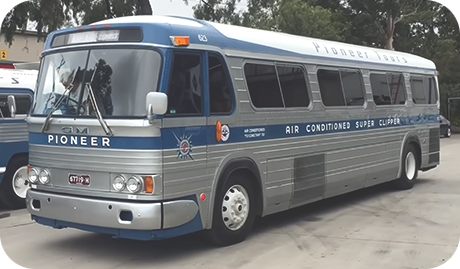
Should I use grounded metal gas cans with portable gen installed permanently?
 

Should I use grounded metal gas cans with portable gen installed permanently?

Started by Kevin Warnock, May 04, 2007, 02:44:57 PM

Previous topic - Next topic

Kevin Warnock

Hello,

I am planning to use a small Honda EU1000i inverter style portable gas generator as my primary power plant on my RTS bus I'm converting. I plan to add an extended run fuel system, so I can run the generator through the night if necessary to run a small window air conditioner to sleep. Here is a link to a page someone posted showing how to make such a system:

http://www.members.cox.net/ccandies/Hondas.htm

This person uses plastic 5 gallon gas jugs as the external tanks. Since I plan to put my generator in a sound box with air baffles to reduce the noise, the installation is intended to be 'permanent.' I think with a few up and down bends in the air flow, and I will quiet the already quiet generator so much it will be almost silent in the bedroom of the bus. The generator will be in the first bay behind the front wheels, on the driver's side. My Honda generator has a ground screw on the control panel, so they appear to intend for you to be able to ground it should you desire. Thus, here's my question:

Should I use metal gas cans, and ground those to the bus frame, and run a ground wire from the Honda generator to the bus frame as well? Or should I just use plastic gas cans and not ground anything?

I plan to feed the AC output of the Honda into my Xantex SW 4024 inverter. That inverter will sync to the Honda, and give me large reserve power. I plan to run the Honda long hours when I'm traveling, but I don't travel much, and I hear these Hondas last a long time. Maybe not like a diesel, but they are less than $1,000, and can be replaced almost anywhere. I don't mind having to manually start the generator, so lack of electric start is OK. My mini-split takes 900 watts, and my window air takes 530 watts. The mini-split will run the Honda to capacity, but I will have the Xantex to supply an extra 100 watts or so if the Honda can't quite keep up. When the air cycles off, the batteries can be recharged. I think I should be able to run the mini-split all day and night, without harm to the batteries, since they will be gently discharged while supplying the 100 watts, and quickly recharged several times per hour. But I never anticipate running the mini-split 24 hours, it just seems like I could. The window air can run on the Honda alone, without the inverter in the middle at all, so the Honda has enough reserve power to handle the window air compressor startup. I've tested this with a watt/hour meter in between, and it works fine, though the generator must not be on eco save for it to work. I'm hoping with the inverter in between I can leave the generator in eco save, and tell the inverter to pull no more than 800 or 900 watts out of the generator. When the air cylcles on, that extra surge will come from the batteries, so otherwise when the air is just running, the eco save power is enough to run the generator and not involve the batteries.

The reason I ask about grounding the generator and gas supply is I know you're not supposed to fill gas cans when they are not sitting directly on the pavement at the gas station. I think there is a danger of static electricity igniting the gas vapors if you fill a gas can while it is in a pickup truck bed, for example.

I want to make my installation safe, which is why I suspect grounding the generator and grounding metal gas cans is the way to go. I could also put the gas cans on the ground when I fill them. But if I ground the cans, would I need to? How is a car's gas tank grounded, if at all? I would like to use standard five gallon gas cans because they are light enough to lift when full, and are mass produced affordable items. I plan to have two on board, which should give me days of full time power if needed. Running part time, I should be able to go a week. But if I need more, I can add a few more cans.

Separately, is it OK to put the gas cans in the same storage box I plan to build for my propane supply? That compartment will be in the second bay, and will be full of holes in the bottom, but vapor tight everywhere else.

Finally, I have considered that just one AC may not be enough, and in that case I will just buy a Honda EU2000i and use that on days when I need two mini-splits going at once, with the inverter supplying the starting surge power for both. My inverter currently can start and run two 17 amp roof airs without problem (but not for long...), with no generator running, so I have no doubt I can get two much more power thrifty mini-splits to run at once.

Thanks,

Kevin

captain ron

If you already have the generator and A/C unit your going to use you might want to see if it will really run the A/C. I borrowed a bigger Honda and loved the quietness but it would not run 2 small a/c's.

Hartley

Boat Tanks.. with disconnects.. 6 gallon, portable
and usually plastic too. almost indestructable and good ones have a priming pump bulb.
Never take a knife to a gunfight!

Stan

Here it is illegal to fill a plastic gas can while it is sitting in a vehicle (pickup box). They must be set on the ground and touching the grounded nozzle before dispensing fuel. Static charge on the plastic container can ignite gasoline fumes very easily.

I would not use anything but grounded metal containers for gasoline inside a bus bay

Ednj

Quote from: Stan on May 04, 2007, 05:14:16 PM


I would not use anything but grounded metal containers for gasoline inside a bus bay
>
>
Grounded to what?  ???
>
>
The vents need to be higher not lower like for propane. :o
MCI-9
Sussex county, Delaware.
See my picture's at= http://groups.yahoo.com/group/busshellconverters/
That's Not Oil Dripping under my Bus, It's Sweat from all that Horsepower.
----- This space for rent. -----

DavidInWilmNC

I used a 20 gallon rectangular (but almost square) polyethylene tank meant for a boat.   I mounted it in the original battery compartment on my MC-8.  It's fairly low so would likely fit in an RTS, too.  It's not much different than the polyethylene tanks in my cars, truck, and jet ski.  It has a connection on the tank for a vent.  I connected fuel line to this and ran it out of the compartment.

Look on eBay under boat parts and accessories for tank* (* is a wildcard and will return items like 'tank' and 'tanks').  I don't know if I'm allowed to say how much I paid for it here, but it wasn't much more, including shipping, than about what 13 gallons of gas would cost!  It's also new.  Good luck with it.

David

JackConrad

Gasoline fumes are heavier than air. They tend to settle to the bottom of enclosed compartments.  This is why bilge blowers are used on boats.  Gasoline fumes have a vapor density of 3-4 (air is 1). So gasoline fumes are 3-4 times heavier than air. This is not the specific gravity which compare liquid gasoline to water.   This is also why NFPA now requires gas water heaters to be installed on a stand at least 18" tall to keep the flame off the floor level where fumes would accumulate.  Jack

Note: the above imformation is from my Fire Academy books & notes
Growing Older Is Mandatory, Growing Up Is Optional
Arcadia, Florida, When we are home
http://s682.photobucket.com/albums/vv186/OBS-JC/

Stan


JackConrad

Grounded to the bus structure.

  I agree all tanks should be electrically bonded to the bus chassis, but how can you do that with a plastic tank?  I wonder how they do that on the new cars that use a plastic tank?  Jack
Growing Older Is Mandatory, Growing Up Is Optional
Arcadia, Florida, When we are home
http://s682.photobucket.com/albums/vv186/OBS-JC/

FloridaCliff

Jack,

Probably that in tank fuel pump. 

So much fun to change.  :o

Cliff
1975 GMC  P8M4905A-1160    North Central Florida

"There are basically two types of people. People who accomplish things, and people who claim to have accomplished things. The first group is less crowded."
Mark Twain

Kevin Warnock

This is Kevin again, the original poster of this question. I love the idea of using a plastic gas tank, as I hear the steel tanks are a spark source for explosion in an accident. I didn't know fuel tanks on new cars are plastic. If they are grounded via an in tank fuel pump, could I replicate that by just sticking a metal stainless steel rod into a plastic tank, to the bottom, and bonding that rod to the bus frame?

Thanks,

Kevin
San Francisco, CA

Hartley

Just go to your local electronics hobby store or Radio Shack and by an Anti-Static wrist cord and strap.

All you need is something to bleed off any static charge, not necessarily a hard ground.

Clip the cord to the bus chassis and wrist strap on the handle.

This is all making a bigger deal out of something simple. Half these guys don't have a clue just off-hand opinions
that may or may not hold real value. Marine gas tanks don't have a problem in boats, Why should they have any
further issues in a coach, truck or car.

The only issue is vapors, If you have a sealed system and are not spilling gas on stuff and then doing something dumb.

Vapors should be vented, aka Bilge Blower in the bay where the tanks sit unless the bottom is open. They are fairly cheap
and are tested to be safe to extract fumes.

The alternative is to go diesel. Safe at any point short of an LP gas explosion caused by a leaky hose or heater. Personally
I wouldn't carry gasoline in my bus unless it was a dire emergency. I don't even like carrying it home for the lawnmower.

I guess that comes from seeing what gas vapors can do...BOOM ! :-\ :-\
Never take a knife to a gunfight!

Ednj

MCI-9
Sussex county, Delaware.
See my picture's at= http://groups.yahoo.com/group/busshellconverters/
That's Not Oil Dripping under my Bus, It's Sweat from all that Horsepower.
----- This space for rent. -----

Stan

Ednj: Nitpicking over terminology is non productive. I refer to all the wires connected to the bus chassis as bonding wires.

The main source of static electricity in the fuel system is caused by the fuel flow in non grounded (bonded) tanks and lines. When fueling at public pumps, the nozzle on the end of the hose is connected to earth ground through a wire in the hose. That bleeds off static charge prior to and during fueling as long as it is kept in contact with the filler pipe.

Hartley

This is more the thing on topic about using plastic gas cans / tanks.

~~~~~~~~~~~~~~~~~~~~~~~~~~~~~~~~~~~~~~~~~~

NIOSH offers guideline for filling gas cans

The National Institute for Occupational Safety and Health (NIOSH) has received numerous reports of fires occurring during the refilling of gas cans. 

A fire hazard always exists when people are careless while attempting to fill portable gas cans, both metal and plastic. However, the potential for a spontaneous fire is even greater around pickup trucks with plastic bed liners or car trunks with carpeted surfaces.

These fires are usually the result of gasoline vapors ignited by a build-up of static electricity. The insulating properties of a plastic bed liner, or carpeting, prevents static charges from dissipating.

This static buildup can generate a spark when a grounded gasoline dispenser nozzle comes into contact with a gas can.

To prevent this potentially hazardous situation, NIOSH recommends that gas cans always be placed on the ground before and during refueling. Before removing the can lid, touch the can with the gas dispenser nozzle. Finally, always keep the gas dispenser nozzle in contact with the can inlet.

The NIOSH Hazard Notice can be accessed at the NIOSH Web site (www.cdc.gov/niosh/homepage.html) under "What's New."

~~~~~~~~~~~~~~~~~~~~~~~~~~~~~~~~~~~~~~~~~~~~~~~~~~~~~~~~~~~~~~~~~~~~

I don't know how current that link is.. Just FYI...
Never take a knife to a gunfight!