Inverter/wiring, novice questions
 

Inverter/wiring, novice questions

Started by aaronjweiss, September 13, 2016, 02:29:29 AM

Previous topic - Next topic

aaronjweiss

Hello and peace to you!

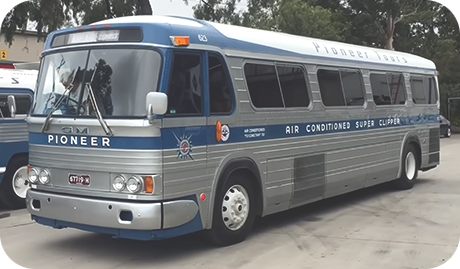
My band and I are converting a 1990 MCI 102c3 into a tour bus, and have a lot of electrical questions. Basically I'm trying to figure out the best way to power 110v (mostly) led lights & receptacles (charging cell phones, computers, using occasional TV but no major appliances: no fridge, water heater, microwave).

On our last bus, which lasted us 11 years, we had a 12v, 3000W inverter mounted behind the driver's seat (where it was easy to shut off on our way out the door) connected via 22' 4 gauge wire to one of the bus stock batteries. I've since read this is problematic, to run 12v power this far on such small cables, and though for us it generally worked, the inverter occasionally shut off & buzzed an alarm sound. Safe to assume this could be b/c of the cable length/power loss?

I've read its best to have the inverter as close to the battery as possible, but this would mean putting it in the front luggage bay or under a couch, where it's not as convenient to shut off as our last location. Is it possible to wire an inverter to shut off via a light switch rather than having to access the inverter itself?  Also, has battery inverter technology changed/improved much in the past 11 years? (i.e., worth looking into a new inverter?).

My basic setup for the last bus was extremely simple, but I'm (obviously) not an electrician...the wiring to the receptacles and lights was on a few separate circuits of 14/2 romex, each of which is wired without any breaker or fuse box with a 3-prong male end plugging into a power strip. That power strip plugged into either 1) the inverter, or 2) "shore power,"  i.e., the 110v power of whatever club we're playing on a given night, via extension cord.

At this point I'm expecting our new bus to be wired similarly, except I'd like to add a deep cycle battery bank (in the air conditioning bay? And I'm still trying to figure out best way to keep this charged, e.g., from alternator, from shore power with battery charger, or both?) for use when we're shut down w/o shore power. To switch between power sources, I imagine simply moving the male plug of the aforementioned power strip from one inverter to another or to the shore power extension cord.

I realize my design is crude and thinking here is scatterbrained, so any guidance would be appreciated---thank you!

Aaron W.

Aaron W.
1990 MCI 102c3
6V-92TA

bobofthenorth

In general you're on the right track by keeping the 12v leads as short as possible.  Its more power efficient to run a longer 110v lead.  Dunno what you've got for an inverter but most larger inverters have some provision for a remote control panel which would allow you to locate the inverter close to the batteries and shut it off from a distance.  I've used 2 different Heart Freedom 25's (which are possibly older than you are) with a great variety of electronics successfully.  Literally the only device that hasn't worked with those old boat anchors was the controls on an electric mattress pad.  So I'm not sure newer is necessarily better.  You know what you've got works - hard to argue with that logic.

I won't get into the lecture about running Romex with plug ends on it other than to say that - in general - if you keep it "temporary" by having plugs on everything you are less likely to violate electrical codes which may matter to your insurer.  You do however need to understand enough about electricity to keep it safe and only you can answer whether or not you meet that criteria.  The purpose of circuit breakers is to keep you from burning things or electrocuting your buddies.
R.J.(Bob) Evans
Used to be 1981 Prevost 8-92, 10 spd
Currently busless (and not looking)

The last thing I would ever want to do is hurt you.
Its the last thing but its still on the list.

gumpy

Pretty much what Bob said.

Additionally, spend a bit of money on a 100 amp Square D QO breaker panel. it's peace of mind knowing your wiring is protected.

Don't mount the battery in the same compartment as the inverter. The offgassing will cause corrosion in the electronics. Put the batteries in the condensor bay
and run the wiring to the inverter through the bulkhead. Use rubber grommets to protect the wiring from the sharp edges of the bulkhead where drilled.

Craig Shepard
Located in Minnesquito

http://bus.gumpydog.com - "Some Assembly Required"

bigred

Depending on who's inverter you have,there are remote controls for these .That way you can mount the inverter any where .You will just need to run a control cable to the remote control .With this set up,you leave the converter itself in the on position all the time and turn it of and on from the remote.I am sure you could wire up a switch that would be cheaper but you won't have the readouts like you will if you use the remote from the factory
Rhet Raby           137 Elk Mtn Rd       Asheville N c 28804             1993 Prevost XL

Jon

I would strongly urge that you do as suggested and run the inverter output through a box with circuit breakers. Also set it up so all incoming shore power goes directly to the inverter 120V input (up to 30 amp) so your inverter can power the 120V circuits or function as a charger. When the coach is running the alternator should charge the house batteries.

There is so much that can be suggested but at the very least do the installation as the inverter manufacturer intended. It may be a little more work on the front end, but will make life so much easier when it is done.
Jon

Current coach 2006 Prevost, Liberty conversion
Knoxville, TN

Cary and Don

Your led lights do not need to go through the inverter. LED lights are 12 volt. Run them right off a 12 volt breaker. If you run them off 110, your are actually using your inverter to make 110 out of 12 volt, then a transformer to make the 110 back into 12 volt.

If  you go to Freedom Inverters and download any of their manuals for RV inverters, you will have very good instructions for any inverter. All the wiring schematics are there. They have the best easy to understand manuals out there.

Cary
1973 05 Eagle
Neoplan AN340

eagle19952

Donald PH
1978 Model 05 Eagle w/Torsilastic Suspension,8V71 N, DD, Allison on 24.5's 12kw Kubota.

Oonrahnjay

       What brand and model of inverter are you using?  BTW, you can run a charge cable (with a suitable disconnect switch) direct from your engine alternator to your "house batteries".  If the start batteries are charged but the house batteries are not, the set with the lower charge will be brought up to charge until they're both at the voltage regulator set point.  That's easy.  (Assuming you have a 12V starter, starter battery, and alternator - if not, it's easy/not-too-expensive to cover that.)  It's good to arrive at a parking place with a fully-charged house battery.  
      As mentioned above, many inverters have or can be matched with a remote control so that you can monitor conditions and switch the inverter off from a useful and convenient location on your bus.  you might not have to be too worried about putting the inverter itself in a place that's not efficient just for access to it.
Bruce H; Wallace (near Wilmington) NC
1976 Daimler (British) Double-Decker Bus; 34' long

(New Email -- brucebearnc@ (theGoogle gmail place) .com)

aaronjweiss

Thank you so much for the input everyone---

To answer everyone's questions/comments:

Bruce, the inverter we've been using is linked here:

http://www.qualitekindustries.com/3000watt.html

I'm just now seeing that this apparently came with a remote switch, which I no longer have, but good to know this option exists, as it definitely solves one of my problems.

Jon, to be honest, I've never even heard of an inverter/charger, but of course am intrigued now. So this would be to hook up to my deep cycle house batteries to (a) change the power from DC to AC when running off the deep cycle battery and (b) charge them whenever I have shore power? Would I still need a separate inverter to make 110v power from the bus's stock batteries, or could I wire a single inverter to do all this? I planned to keep the stock/starter & deep cycle battery banks totally separate just to make sure that when I'm running from deep cycle I'm not somehow also depleting my starter batteries, but maybe this is more easily avoided than I realize...

Craig, I think I'll take your advice re: putting house batteries in the condenser bay, but am thinking of putting that inverter just above those batteries, in the coach interior, just behind the driver's seat. Bad idea?

Cary, are all LED's 12v? I bought the mine from ebay where they are listed as compatible with 85v-265v power, so I'm a bit confused by this...

http://www.ebay.com/itm/381663379451

I've planned to wire them as part of a 110v circuit--my thinking was this would make it easier to just have one plug to use for shore power, keeping it all a/c seemed the simplest way to do this---but maybe I'm missing something?

And Donald, you suggested I buy a particular inverter or something similar to it: may I ask, similar in what respect?

Thanks again fellas!
--Aaron W.
Aaron W.
1990 MCI 102c3
6V-92TA

bobofthenorth

An inverter charger will be significantly more expensive than a stand alone inverter and a "good" charger inverter will be more expensive again. 

FWIW I think LEDs are actually assembled in banks of 1.5 volts but it really doesn't matter for our purposes - you can buy them in a wide variety of voltages.  Buy what works for you.  In general though the advice to stick to 12 volts wherever practical for your lighting is good because you will have efficiency losses in the inverter and you may have additional losses in whatever device drives the lights themselves.

Your thinking on shore power simplicity is good but once you factor in a charger then 12v loads become possible while you are on shore power.  Keeping the house and start batteries separate is wise but you may want to have some kind of controlled cross over so that you can charge the start batteries on shore power and so that you can use the house batteries as backup start batteries.
R.J.(Bob) Evans
Used to be 1981 Prevost 8-92, 10 spd
Currently busless (and not looking)

The last thing I would ever want to do is hurt you.
Its the last thing but its still on the list.

TomC

Always think of the inverter as a nice stereo system-mainly to keep it indoors and dry. Mount the batteries as close as you can and use the biggest cables you can. I have a 2,500 inverter powered with 2-8D AGM batteries. My inverter only powers the primary water heater, bathroom heater, microwave and various plugs. The inverter/charger is 22 years old and never missed a beat. If you have 24v on the bus, then use a 24v inverter-which means a 4,000 watt inverter. My inverter is a modified sine wave, which powers everything fine, except the microwave hums and you have to give it more time, and the fan on the stove exhaust runs slower. But the modified sine wave runs my LCD TV, computers, everything else just fine. There are nice inverters out now that have load sharing (if you're only on a 20 amp plug, the inverter will kick in if extra juice is needed), and pure wave also.
I have a separate circuit breaker panel for inverter stuff. Items that are not powered by the inverter are the 3-roof top A/C's, secondary water heater, battery charging, washer/dryer, refer, freezer. Good Luck, TomC
Tom & Donna Christman. 1985 Kenworth 40ft Super C with garage. '77 AMGeneral 10240B; 8V-71TATAIC V730.