Things I need to think about and prepare for but don't know it (seeking input)
 

Things I need to think about and prepare for but don't know it (seeking input)

Started by Hcklbery, August 30, 2010, 02:14:21 PM

Previous topic - Next topic

Hcklbery

I am a new owner of an old bus and just got done reading some of the threads regarding safety in operating these older units.
Without stirring up anyone's ire I wonder if there might be those out there who would take the time to just reply post things I should be thinking of that comes from experience and knowledge garnered from being around this equipment far longer than I.
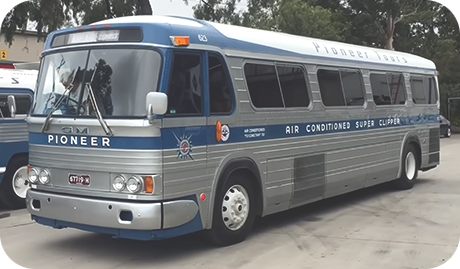
I have the 1964 GM coach 4106 with the 8v71 4 spd sft trans.
Do I need to worry about the air compressor and have a replacement on hand just in case, I know absolutely nothing of substance about diesels or these coaches.
Ive replaced two rear tires and now have good tread on all etc. I've done what I know to do but what is becoming evident to me in reading some of these posts is the potential dangers from what I DON'T know.
I agree that safety trumps all on the road with a 30,000 lb potentially out of control assault killing machine.
Any input would be appreciated, civil if possible but if not I'll shake the gold dust out of it and let the rest go on down stream if civility escapes your mood at the moment. I JUST NEED TO KNOW WHAT THINGS SHOULD I BE THINKING OF BEFORE I REALIZE IT ON MY OWN.(AFTER THE CRASH)
I AM ALL EARS, so pls keep it short as it just KILLS my lumbago's trying to get around on these DA%& lobes. :)
Thanks:
The Huckster.
This is a 64 4106 4 sp shft 8v71/Appreciate ANY advice/info. A Rank Novice but learning.

Len Silva

I would want to be sure that the low pressure buzzer works.  When you get down to 60 psi, there is still enough air for several stops before the spring brakes kick in.

Don't over think it.  If the compressor pumps well and there is not a lot of oil in the air, you will be just fine.

The only reason to carry spare is to insure that that particular part never fails, but the one thing you don't have a spare for will.  Murphy and the Bus Gods have a very close relationship.

Once you know that your driveline is in good shape, fill it up and drive.

Hand Made Gifts

Ignorance is only bliss to the ignorant.

Cary and Don

Finding all the air leaks will insure you have as much air as possible.  It's easy to do and just time consuming.  Making sure that your breaks are adjusted just right will help too.  These are common things that need to be done when you buy an older bus.  Neither requires money to fix, just some labor hours.  There are threads here that cover both. 

Don and Cary
GMC4107
Neoplan AN340
1973 05 Eagle
Neoplan AN340

Lin

If you have not done so already, have someone that really knows what they are doing go over the bus.  When you have a list of problems, you can decide which require attention and how fast.  You want to make sure the the air system and brakes are in good working order.  Wheel seals are important too since if they are leaking, they will seriously compromise the brakes.  It is a good idea to look for any area that is wet.  Some leaks you can live with.  Some are of concern for either potential safety or breakdown issues.

Another thing to do is to start to get to know the wiring--both coach and house.  People do all sorts of things with wiring that you don't want to suffer for.  Follow whatever you can.  Look for wires/cables that are stripping or compromised in other ways.  Recently, when Don F. worked on my bus, he found that the 2/0 cable that goes to the starter motor was stripped bare where it entered a steel rail.  It was actually stripped where it came out also.  This was truly a disaster waiting to happen.  Also look for any wires/cables the go through metal bulkheads, etc that are not protected with rubber grommets of something else.  If your bus was purchased from some professional company, it will be more likely, though not guaranteed, to have better quality repairs, additions and fixes.  However, one as old as yours (and mine) are likely to have lots of dimwitted, amateurish, and pure boneheaded adaptions.  You may not be able to get to them all at once, but once you know where they are you will know what you want to deal with eventually.  I have had this bus for almost three years and have just gotten to changing some wiring I did not like but did not consider dangerous. 

If you have questions about the way something was done, ask about it.  You will get lots of answers.  We all have opinions and although some here really know what they are talking about, and some are less qualified, the general average is likely to help you get to where you want to be.  Sorry for making it so long.
You don't have to believe everything you think.

gumpy

Of course safety is your primary concern.

If possible find a fellow busnut close by, preferably one who knows the 4106, and ask him to spend a day with you teaching you about
your new bus. Here is a list of basic things you need to understand (pardon if you already do):
o how to inspect and adjust the brakes properly
o how to grease the coach properly
o how to properly check and tighten lug nuts on the wheels
o how to check and adjust tire pressure
o how to check engine and transmission oil levels, and how/what to add if low (very important on the what part)
o how to check/change the air filter
o how and where to check for air leaks
o how to disconnect the batteries. Learn how they are wired in case you need to remove them.
o how to reprime the engine when you run it out of fuel (yeah, it happens to all of us at one time or another. Just be prepared.)

If you are not accustomed to driving a large vehicle, learn how to do it properly and safely. Turning (especially right hand turns) can be a big problem for newbees. Air brake usage is another
concern. Learn about pre-trip safety checks and periodic checks.

If you will be towing a vehicle, you need to learn about that. All the equipment, connections, tow bar system, etc.

SEARCH ARCHIVES / ASK QUESTIONS.  The only bad question is the one unasked. Most questions have been addressed in one form or another over the past several years, but it's not always
easy to find it in the archives. The search function on this board does not work well. When in doubt, ask again. There are some very patient people on here who will respond to those questions. Be specific, though, when you ask. General questions will get general answers (see this thread). Specific questions will get more specific answers.

craig


Craig Shepard
Located in Minnesquito

http://bus.gumpydog.com - "Some Assembly Required"

Jerry W Campbell

I repeat what Lin said. Do yourself a favor the first time around and take it to someone who knows what it is supposed to look like and do a service/inspection. It's a few hundred $ but you will feel MUCH better knowing the condition of everything.
Jerry
Endeavor to Persevere

zubzub

For me Order of importance:
  Brakes, Steering, Tires, Suspension, Gages, External Signal/Lights. 
I agree you should have the bus checked out by a knowledgeable bus mechanic.
Then you should read the maintenance manual for the bus, then you should read it again.  These old beasts are a lot more sophisticated then I thought when I first got one.  The manuals are good reading though and will familiarize you painlessly with the systems.  As soon as you can learn to check the basic items on a daily basis while on the road, this will allow you to be sensitive to your buses "issues" ....oh yeah a cheap IR temp sensor from HF  will help detect some problems before they become serious.
I am actually pretty anal about safety issues, I will always stop my vehicle and check out anything I feel may need to be checked, this is mostly because I have been driving old vehicles my whole life, the newest rig I have ever owned was already 12 yrs old and had 200,000 miles on it and in all that time I have never been towed.
Have fun.
Oh and then read the manual again ;)

Hcklbery

This is really good input, Keep it coming... :)

MORE INPUT... ;D ;D


o how to inspect and adjust the brakes properly
I don't know this.
o how to grease the coach properly.
Needs IMPROVEMENT
o how to properly check and tighten lug nuts on the wheels
Don't have the equipment but I take it to Les Schwab periodically for this.
o how to check and adjust tire pressure
Les Schwab
o how to check engine and transmission oil levels, and how/what to add if low (very important on the what part)
straight 40 wt diesel oil/ I don't know on the trans
o how to check/change the air filter
This has the oil baths and am unclear as to how often and how to.
o how and where to check for air leaks
Unknown.
o how to disconnect the batteries. Learn how they are wired in case you need to remove them.
I removed all the batteries and cleaned the whole than sprayed battery protectant liberally over all the connections.
o how to reprime the engine when you run it out of fuel (yeah, it happens to all of us at one time or another. Just be prepared.)
THIS ONE I KNOW ALREADY Thanks (as bs4104 can attest) I've called a few times LOL > ...  ;D ;D
This is a 64 4106 4 sp shft 8v71/Appreciate ANY advice/info. A Rank Novice but learning.

Hcklbery

WildBob is sending me a manual I think. So will go thru it as early as.
Good advice to be sure.
This is a 64 4106 4 sp shft 8v71/Appreciate ANY advice/info. A Rank Novice but learning.

artvonne

  The most important thing you could ever do for yourself is study the maintenence and operators manuals. Walk around while you read them and touch everything. Teach yourself until you know it by heart. Then when you get together with someone who can show you around the Bus, youll know what they are showing you and talking about.

Mex-Busnut

How long do the air brake lines usually last? Do they need replacing in a 15-25-year-old bus?
Dr. Steve, San Juan del Río, Querétaro, Mexico, North America, Planet Earth, Milky Way.
1981 Dina Olímpico (Flxible Flxliner clone), 6V92TA Detroit Diesel
Rockwell model RM135A 9-speed manual tranny.
Jake brakes
100 miles North West of Mexico City, Mexico. 6,800 feet altitude.

gumpy

Quote from: XE1UFO on August 31, 2010, 02:29:44 PM
How long do the air brake lines usually last? Do they need replacing in a 15-25-year-old bus?

Depends on the previous owners, but if they are original, they probably need replacing.
Craig Shepard
Located in Minnesquito

http://bus.gumpydog.com - "Some Assembly Required"

desi arnaz

 o how to check engine and transmission oil levels, and how/what to add if low (very important on the what part)
straight 40 wt diesel oil/ I don't know on the trans


i could be mistaken but don't you have to use special 2 cycle engine oil?
thomas f  Bethlehem n.h

FloridaCliff

Quote from: XE1UFO on August 31, 2010, 02:29:44 PM
How long do the air brake lines usually last? Do they need replacing in a 15-25-year-old bus?

Replacing them while sitting at home is a piece of cake, on the side of the road a pain in the arse.

I have done both.  After the SOR experience Just decided to do them all and have a baseline for future reference.

Same thing with fuel lines, brake diaphragms, main battery cable that runs fore and aft.

Oh back to the brake air lines: one thing I found was when there are aged, when you replace one, it causes the others to fail as the new one doesn't flex/stretch with application and the old ones can't handle the extra "STRESS"

"when in doubt, change it out"

Cliff
1975 GMC  P8M4905A-1160    North Central Florida

"There are basically two types of people. People who accomplish things, and people who claim to have accomplished things. The first group is less crowded."
Mark Twain

Hcklbery

Don left his 4107 Maint manual with me to study a bit and am going to be making good use of the time, just got up from a great rain pattering on the roof nap YYAAWWWNN ;)  So now that I'm ready for supper I'll do some reading while I have my evening tea and pipe.
YYAAWWWNN...

;) ;)
This is a 64 4106 4 sp shft 8v71/Appreciate ANY advice/info. A Rank Novice but learning.