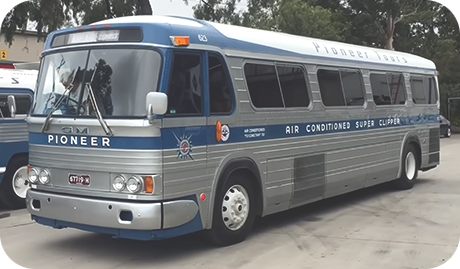
Heating and A/C in the MCI D series
 

Heating and A/C in the MCI D series

Started by Jim Blackwood, December 21, 2018, 09:32:47 AM

Previous topic - Next topic

Jim Blackwood

Now that I'm a little more familiar with what the bus came equipped with it seems time to tackle this topic. I guess the first question would be, how many of these came with the Webasto? My reading leads me to think it was a large proportion from quotes like, "The Webasto became standard equipment" but is that really true, and in what year? If so it would seem that the issue of heat in the conversion is all but resolved since 80K btu should more than do the job. But, perhaps even more important is the current draw from the fans.

Maybe we need to explore the options for electronic motor controls for the blowers. Depending on the characteristics of the blower motors themselves it is quite likely that the fans can be run at reduced speeds through something like a PWM controller at increased efficiency. The main blower is a squirrel cage type and so are the overhead ones so they are already pretty efficient. I haven't looked at the dash blower yet. The condenser used a pair of bladed axial fans.

The temp controller is already a digital thermostat type, in fact it looks like it came straight out of an industrial catalog, so I don't think that could get any better. The heat side of the picture looks pretty easy overall, provided the Webasto is there. One wrinkle might be to install ball valves to isolate the engine so you aren't heating it when parked.

On to the A/C and this one is going to get tricky. The OTR AC uses about 33lbs of r134 or r22 freon. When running liquid should be visible in the lower sight glass on the receiver tank. If that is OK, there is a strong incentive to retain the OTR air, completely aside from the fact that it is awesome. There are four evaporator units, sort of like a mini-split only more of a maxi split. Total system capacity is 13 tons, 10 at the main evaporator and 1 at each of the overhead and front dash units, although the expansion valves on the overhead units are rated at 1-1/2 tons each. What this means then is that exclusive of the main evaporator you have a built in capacity for 36,000 to 48,000 btu of cooling. This might be enough unless you are out in the mid-day summer Arizona sunshine. So the first task it seems to me is to see if those evaporators can't be used. Now each of them is equipped with an expansion valve and there are numerous solenoid operated control valves on the liquid lines to control fluid flow. However, although there is a shutoff on the main liquid line, there does not appear to be one after the smaller lines branch off. In other words, either the main valve could be moved downstream or another could be added to allow the main evaporator to be  turned off.

Now before getting into that, what to do about the freon? It has to be evacuated. This can be done in a number of ways but because a 30lb tank is not large enough to hold all the freon, something larger is needed, or else great caution must be exercised in splitting the charge between two tanks. A spare AC compressor belted up to an electric motor of at least 1/2hp capacity should handle the pumping duties, and this can then be released back into the system after modifications and leak checks are done in a typical charging operation, using the sight glass on the receiver as a reference.

With the system open it should be a simple matter to add the solenoid valve but it should be wired in such a way that it is open any time the  engine driven compressor is engaged to avoid overpressurizing the system.

Then the other component that is needed is a 4 ton compressor plumbed in parallel with the engine driven compressor. This compressor should be constructed in such a way that freon cannot backflow through it when it is unpowered. The electrical power requirements need to be evaluated. One would not expect such a compressor to be able to run on 120VAC power. But again, there are options. Because each evaporator has it's own shutoff solenoid you can use 1 ton, 1-1/2 ton, 2-1/2 ton, 3 ton, or 4 tons of capacity depending on which ones are switched on. In fact then, you could mount and plumb in four 1 ton compressors and switch them on as needed. Each of which would run fine on 120v. And you could use the most efficient compressors available, such as the ones used in the mini-split units. And if you really wanted to overdo it you could plumb in a couple of 5 ton compressors as well so you could run everything at once. Might need a big generator to pull them but it could be done.

The condenser would be massive overkill for any but full system operation (165,000btu OTR air) meaning that the condenser fans could be run at a very slow speed.

It'd take a little work, but not as much as installing a mini-split system and it would make use of the original ductwork and components.

Jim

I saw it on the Internet. It MUST be true...

TomC

Or you could remove all that OTR stuff and do what many do-run 3 or 4 roof tops off a Diesel generator. Simple, and if one gives up, you still have 2 or 3. On my 40ft transit with big windows, 2 13,500btu roof tops are enough to keep it cool going down the road-except when it gets above 100. Then the third is kicked on. Good Luck, TomC
Tom & Donna Christman. 1985 Kenworth 40ft Super C with garage. '77 AMGeneral 10240B; 8V-71TATAIC V730.

TomC

And you'll notice that just about all are using roof top A/C's again because of the simplicity and servicability.
Tom & Donna Christman. 1985 Kenworth 40ft Super C with garage. '77 AMGeneral 10240B; 8V-71TATAIC V730.

Gary Hatt - Publisher BCM

My thoughts are if the OTR A/C is working then leave it in. Nothing else will cool your bus like the OEM A/C unit.  But they only run of course when the engine is running which is great for passenger buses.  However, after a while they can start costing a lot of money to keep Freon in and for a conversion then it may be time to forget about that system and run with roof airs / mini-splits and run your generator whilst driving down the road.  In my MC-9, I had the A/C charged and it ran find for an entire summer.  I loved the cold air.  In my Eagle everything was already ripped out and 3 A/C units were mounted on the roof.  They work well, but of course I have to run my genny all of the time when I am driving in hot weather.  It does create wear and tear on your generator, but a good generator will run 20K - 30K hours before it needs replacing if it is maintained well. 
1999 Prevost H3-45
Gary@BusConversionMagazine.com

richard5933

There was an earlier thread on the whole OTR air conditioning debate. I remember that more than a few with the OTR systems commented on how well they keep the bus at a comfortable temp while going down the road. I would agree. IF you have a working OTR system, there is nothing wrong with keeping it in place for use on the road. Kind of what it was meant for.

However, for use when camping and either on generator or plugged into shore power, there are much easier options to keep your cool. Roof-top a/c units are the most common, least expensive, and most accessible to most for repair/replacement.

The type of hybrid system you're talking about works in theory, but my fear would be needlessly complicating an otherwise well thought out system. Introducing additional components is only going to make things more difficult to maintain and to deal with when you're out and about. Heck, I'd be worried that just making the modifications you've described could somehow compromise the system  - they can be really finicky and not amenable to being messed with often. And of course, if you make modifications, you're probably going to void your factory warranty.

I know a lot of people run their diesel generators while going down the road, but I just can't understand how that's better than letting the bus's engine handle the load if you have a working OTR system. Plus, if I remember correctly Jim is planning to use a gas powered air-cooled generator, at least at first. May not be an ideal candidate for use on the road (will depend on how the ventilation plays with high/low air pressures around the bus).

We have the OTR a/c unit - works great while we're driving. Have the OTR heat as well, which also works like a champ. For 120v use we have two commercial refrigeration units installed as split units, and we have both propane furnace and electric heaters to stay warm.

The Webasto unit is probably connected right now to serve two purposes: 1) It can pre-heat the engine, and 2) It can maintain proper coolant temp so that the interior can stay warm, especially at idle. It may also have been used to pre-warm the interior of the bus during loading times.

Using the Webasto to provide interior heat while the engine is not running may require adding some more plumbing and altering the loops, pump locations, etc. If the Webasto is currently running a single loop with the engine in the loop, then you'll have a HUGE cast iron heat sink in the back of the bus exposed to the weather. It will suck out lots of the heat the Webasto is putting into the system and not be terribly efficient. On our 4106, the Webasto was plumbed to its own heating loop that provided heat to the interior. When we wanted to use the Webasto to pre-heat the engine and generator, we flipped a switch with turned on a pump in another loop. This secondary loop exchanged coolant between the Webasto's main loop and the bus cooling system to transfer heat to the engine. Worked really well and allowed all the Webasto's heat to remain inside the bus until we woke up in the morning. Only took a short time with the secondary pump going to pre-warm the engine.
Richard
1974 GMC P8M4108a-125 Custom Coach "Land Cruiser" (Sold)
1964 GM PD4106-2412 (Former Bus)
1994 Airstream Excella 25-ft w/ 1999 Suburban 2500
Located in beautiful Wisconsin

lostagain

A Webasto or equivalent coolant diesel heater has become ubiquitous with 4 stroke engines in trucks and buses mainly to keep them at operating temperature (+- 180F), and to preheat them before a cold start. These engines like the S60 run cold unless worked hard. A cold engine smokes like a locomotive in cold weather, not to mention how bad it is for it to run cold . In stock form, that heater comes on automatically on and off to keep the engine at operating temperature, with a light on the dash to show you when it is on. Also, a hot engine is necessary to heat the interior of the vehicle. I've said it before, and again here: the Webasto is the best invention since buses were discovered... In a conversion, it will have many other uses. It will serve you well to keep it maintained in good running condition.

JC
JC
Blackie AB
1977 MC5C, 6V92/HT740 (sold)
2007 Country Coach Magna, Cummins ISX (sold)

buswarrior

Something to wonder about...

Designing for the typical 30 amp campground plug?

What is the fallback position if you are on the end of a friend's 15 amp extension cord in a residential setting? (which means no generator available)

HVAC is a tricky business, boiling and condensing a refrigerant inside the system requires balance of ALL the variables, sizing, volume, air flow, pressures, over a range of external and internal temperatures.

The HVAC professionals that used to be here... oh well... they got tired...

There is a fascinating design exercise in this project, but the popular, simple, less expensive, pre-packaged solutions that everyone is using will repeatedly rise to the top of the heap.

4 stroke engines all need a coolant boiler to reach operating temperature/provide adequate heat for the passenger compartment in coach use.

Webasto and Proheat typically in MCI.

As for power draw, in an MC8, with the big 24 volt body blowers running, a large DBW300 Webasto and the circulation pump spinning, a Trace 4024 Inverter/charger pulls 10-11 amps of 120 VAC just to run that stuff.

My old coach was a mobile classroom in its mid-life job, and had a shore cord available wherever it was scheduled to provide service.

A pair of mid 80's roof airs kept it 70 degrees inside sitting in direct sunlight in that Jellystone park behind Bronner's one summer at 95 degrees in the shade.

OTR AC is lovely, until it starts leaking... and you pay, and pay, and pay for people to try to get it to stop leaking...

The heartbreak is having to decide at what point of ca$h bleeding to stop... what's a shop charging to replace a compressor seal and re-charge today? And again, and again, then the next tech reports that an expansion valve is leaking and says the last guy was gaming you... who is lying, and who is telling the truth?

Vicious game, seeking service for an old commercial vehicle...

The reports on the Boards are not a fair representation of busnut experience... pretty rare for a fellow to admit he pissed away $10k being ripped off trying to fix the unfixable...

If you are going to design a most excellent combination HVAC system, you really need to be able to do your own work on it, not risk paying others...

And then you can earn some money helping others accomplish similar?

Happy coaching!
Buswarrior


Frozen North, Greater Toronto Area
new project: 1995 MCI 102D3, Cat 3176b, Eaton Autoshift

richard5933

Lots of good thoughts.

One comment about the Webasto...

I've seen a couple of times recently that folks are trying to heat the bus with the engine not running by using the Webasto. To circulate the heat, the bus's HVAC air handler is run, which consumes huge amounts of power.

Our 4106 had a Webasto. Two loops - one to heat the coach and one to pre-heat the engine. When used to heat the coach, there was a low-current 12v circulating pump which moved the heated coolant through the lines. There were also a couple of exchange units inside the coach which took heat from the coolant and threw it into the coach. These also used low-current 12v fans to power them.

We were able to go at least a couple of nights running the Webasto, and we really didn't have that much in the way of battery capacity. Could never have done it if we were trying to run the bus's HVAC fans.
Richard
1974 GMC P8M4108a-125 Custom Coach "Land Cruiser" (Sold)
1964 GM PD4106-2412 (Former Bus)
1994 Airstream Excella 25-ft w/ 1999 Suburban 2500
Located in beautiful Wisconsin

Jim Blackwood

I'm not sure I'd agree that ripping out the OTR AC and mounting 3 roof units is easier. Sounds like an awful lot of work to me. Now granted, if you'd never done any AC work it could be intimidating. But honestly it just isn't really that complicated. You can make anything SEEM more complex with formulas and calculations and charts and special tools and blah, blah, blah but when you get right down to it the biggest things you have to worry about are leaks, max pressures, and making sure your components are within a reasonable range. Take that mini-split system with the industrial compressors for comparison, with that you have similar condensers, evaporators, etc. OK here we have the most massive condenser you are going to find. That right there is the heart of any AC system and it's absolute killer. The bottom line is that you can't suck out any more heat then you can dissipate. With that condenser the rest of the system can coast. There is so much heat dissipation capacity there that it's almost ridiculous. Then the compressor needs to match the evaporator and TXV (expansion valve). If you look at the system plumbing chart, one thing that is clear is that there are numerous shutoffs for the secondary evaps. Each one has a solenoid cutoff, a manual cutoff, and then the TXV. Which means the main system can run with anywhere from 10 to 13+ ton capacity. That's quite a bit of flexibility, and it's mainly because probably at least 1/3 of the system freon can be stored in the receiver so that when only the main evap is running there's somewhere for the excess freon to go. The effect would be to starve the compressor inlet, which doesn't hurt a thing other than system efficiency. And I don't think efficiency was at the very top of their list in building this system.

The changes I'm suggesting are simple ones. The main liquid line already has a solenoid shut off valve so adding a second one after the secondary line tees off is not going to affect normal operation. But it will allow the big main evaporator to be taken off line the same way the secondary evaporators can. There would be no need to do this as long as the main compressor is being used. The effect would be to starve the inlet even more. No harm done but even less efficiency.

Now the type of scroll compressors used in modern residential condensers are extremely efficient, compact, light weight. quiet, self contained and have soft start abilities. Some of these go as high as a Seer 22 rating and although that is achieved by a careful balancing of components most of it is accomplished in the compressor. (seer is the ratio between BTU and power consumption)

So you take one of those new compressors and use it and it will make just about any system more efficient. Not much different than the industrial compressor installation in concept, but a compressor-in-a-can is potentially easier to deal with and certainly more proof against leakage. That is why they are so common.

For another wrinkle, some of these newer compressors have a variable output compressor. So the potential exists to use one auxiliary compressor to provide cooling in a range from 1 to 4 tons of cooling depending on demand. Of course, even above seer 18 you aren't likely to do that with 120v so we're back to dual compressors.

You can think of a compressor that is not running as a check valve. Two actually, one at the outlet and one at the inlet but both facing the same way. So no freon is going to flow backwards through the compressor under normal circumstances. It's just like your water system with two sureflo pumps hooked up, whichever one is powered up is going to pump water. Same with a freon pump. You would have no reason to run both the engine pump and the 120v pump(s) at the same time but if you did it wouldn't hurt anything. They are pumping a gas. If you starve the inlet nothing happens. If you block off all the evaporators the freon accumulates in the receiver and the lines, including the condenser. Other than that you just have to make sure that the freon being pumped is an appropriate volume for the evaporator that is being fed. No different than the mini-split. I don't see where it is that complicated. With multiple compressors it will function along the same principles as before but just with different power sources and the capacities can be switched on or off as desired using mostly the same components that were in place before any modifications.

Now aside from that, the existing system was designed to run for millions of miles. If there is a flaw somewhere it can be repaired. You have a choice of what compressors to run and what evaporators to power. It becomes more flexible and probably more efficient as well. Then if something breaks down you fix it, much the same way that you would have otherwise, and take every precaution to avoid losing the freon since 30lb bottles don't exactly come cheap. This includes periodically checking the freon level to catch any leakage early.

In summary what you have are the addition of a valve and two can type compressors, with some rudimentary control circuitry. Doesn't sound like such a big job to me. Now admittedly if there is a leak you need to find and fix it first and foremost. Florescent dye and black light flashlights that you can buy at HF work remarkably well for that, and yes, it really is an advantage to be able to do your own work. I never bothered with the certifications but I've been doing my own A/C work for decades. Sometimes it can be a challenge, and it is possible to screw things up just like with most other things. But most people learn from those things. As for running on a 15 amp extension cord? You might only get one overhead unit at 12Kbtu but with the right combination of can compressors there's no reason why that shouldn't be possible.

Jim
I saw it on the Internet. It MUST be true...