Ducting design to reduce Airflow noise
 

Ducting design to reduce Airflow noise

Started by Jeremy, October 08, 2009, 05:30:55 PM

Previous topic - Next topic

Jeremy

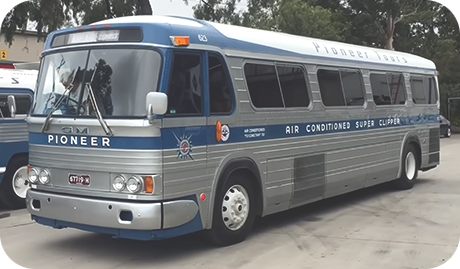
In my conversion I am retaining the original bus's heating system, which consists of a heat exchanger and fan mounted below the floor on each side of the bus, with a duct running the full length of the bus on both sides to deliver warm air to the feet of each passenger.

I have removed the full-length ducts, and plan to replace them with much shorter ducts directing the air out of vents in the base of various cabinets and items of furniture. This evening I fired up the system (with no ducting fitted at all), and was surprised by how much noise was made by the air rushing through the heat exchangers - it made me realise that it would still be quite noisy even after my 'short' ducts were added, unless I do something clever to combat the noise. Are there any recognised tricks using baffles or bends or filters to reduce the noise transferred through an air ducting, without impeding the air flow too much? I imagine it must be a common concern in air conditioning systems and so on.

Anyone got any tips to share?

Jeremy
A shameless plug for my business - visit www.magazineexchange.co.uk for back issue magazines - thousands of titles covering cars, motorbikes, aircraft, railways, boats, modelling etc. You'll find lots of interest, although not much covering American buses sadly.

buswarrior

HVAC industry has lined ducting, the lining acts as a sound deadener.

Sound doesn't like to turn corners, so an elbow or turn in the duct, with a less than reflective surface inside the bend, will knock a lot of noise down.

happy coaching!
buswarrior
Frozen North, Greater Toronto Area
new project: 1995 MCI 102D3, Cat 3176b, Eaton Autoshift

Chuck Newman

BW is right on track.  I haven't checked this with a sound meter though I recently purchased one, but I've found that for each 90 degree turn, sound drops about 50%, measuring with two pretty good ears.  As BW mentioned, you will also need a sound absorbing liner to greatly reduce the echo effect of sound bouncing off a hard surface. 

Chuck
1989 MCI 102A3, Series 50, DDEC III, Allison 740D

Jeremy

Thanks, that's interesting. Would I be right in assuming the 'sound absorbing liner' is a foam-type material? I cannot use off-the-shelf ducting for my short ducts due to the very specific size and shape it has to be, but I could certainly put some bends into it and stick foam sheet to the inside surfaces

Thanks for the info.

Jeremy
A shameless plug for my business - visit www.magazineexchange.co.uk for back issue magazines - thousands of titles covering cars, motorbikes, aircraft, railways, boats, modelling etc. You'll find lots of interest, although not much covering American buses sadly.

bevans6

The material comes to the ductwork sheet metal shops in sheets and is cut by them to make ducts.  Every one is custom, so they could make yours for you based on drawings.  More expensive than DIY, but it's out there.  I had a furnace installed a while ago, the guy showed up with no ducts.  He did a few measurements, called his shop, gave detailed directions over the phone, and by the time he had muscled the furnace into place a truck showed up with his ducts, custom cut and formed, in about 30 minutes, and they fit perfectly.  I was frankly astounded!

Brian
1980 MCI MC-5C, 8V-71T from a M-110 self propelled howitzer
Allison MT-647
Tatamagouche, Nova Scotia